
Benzaiten
My pilgrimage to meet the goddess Benzaiten

After my first trip to Japan back in 2018 I wrote about my pilgrimage to visit some of the goddess Benzaiten’s many shrines. Since writing that article I have learned more about this fascinating deity, so I thought I’d re-share an updated version of it here. Because Benzaiten is a complex syncretic deity and there is a lot to cover, this post is longer than what I will usually be sharing. Despite this, there is plenty of information that is beyond the scope of this article, so you will find a link at the end that is a great place to start if you are keen to do more research.
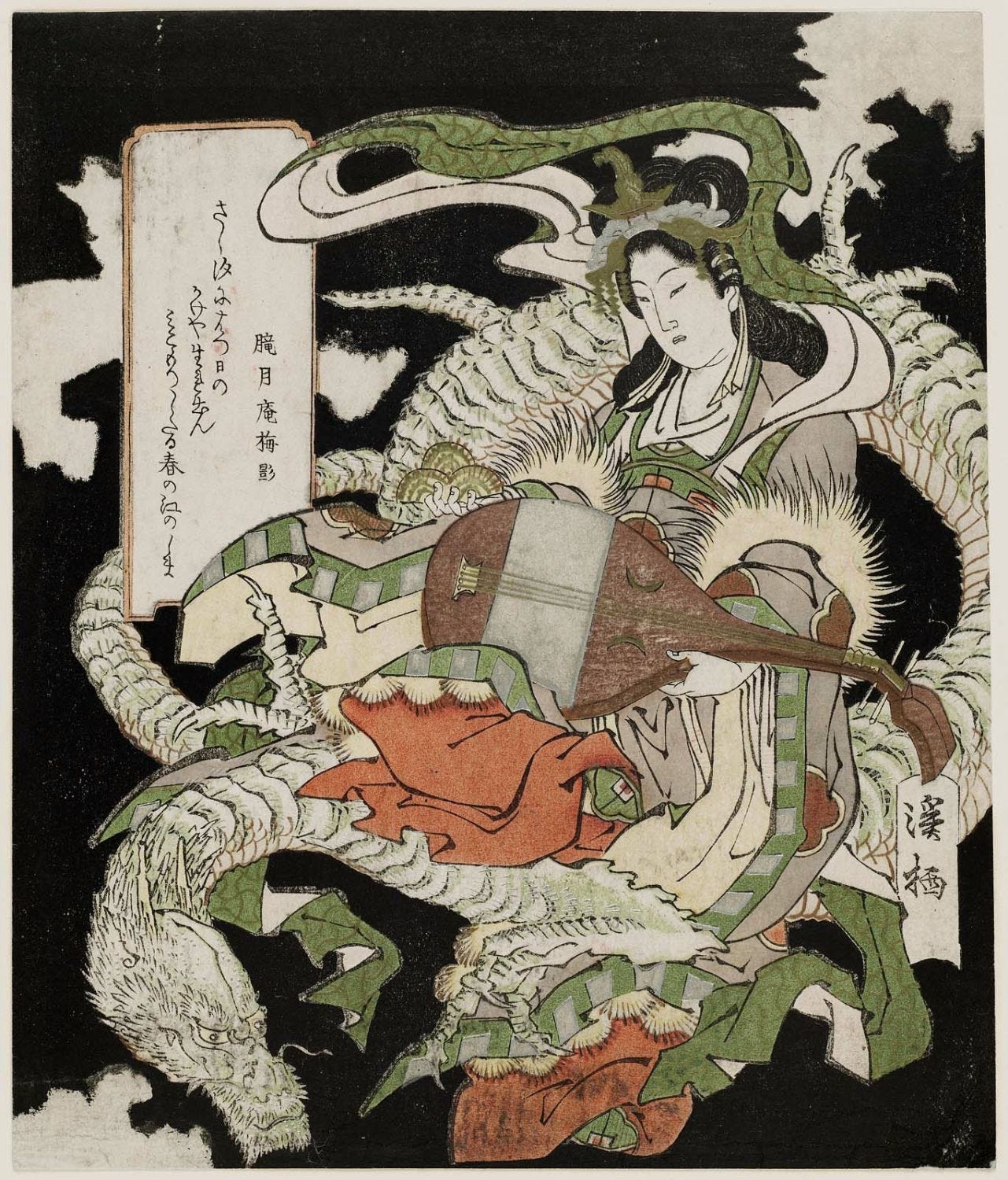
My long-awaited trip to Japan coincided with a fierce typhoon that passed over the country during my stay in the coastal city of Kamakura. As I lay listening to the wind howling outside and the shutters banging against the side of the house, I began to understand how an entire region came to be convinced that a monstrous five-headed dragon was terrorising the coastline. From the relentless, wind-whipped ocean with waves crashing into the shore, to the ghastly winds that seemed intent on tearing away everything in their path, if ever I had sensed the presence of a dragon, it was that night. So when I woke the next morning to find the house still miraculously standing and the sky a clear, bright blue, I too felt a debt to the benevolent goddess Benzaiten. It seemed obvious that she had weaved her magic to placate the fierce beast. As promised by the locals, the majestic Mount Fuji that had been thus far obscured by haze was now clearly visible across the bay. As we gazed at it in the distance, with the island Enoshima sitting calmly in the still choppy waters, I sensed the real magic of this region of Japan and so ventured forth to pay my respects to the goddess Benzaiten.
Who is Benzaiten?
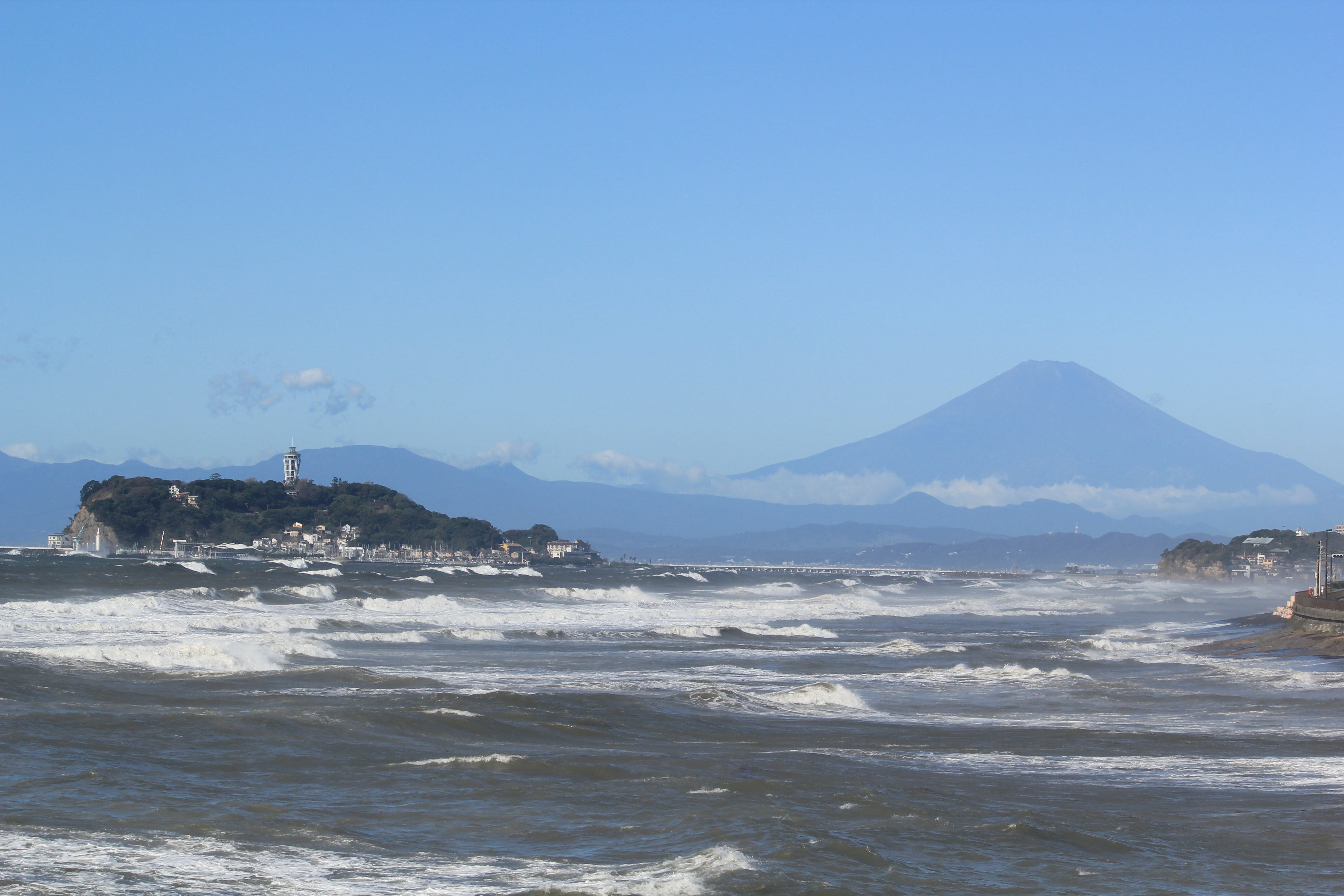
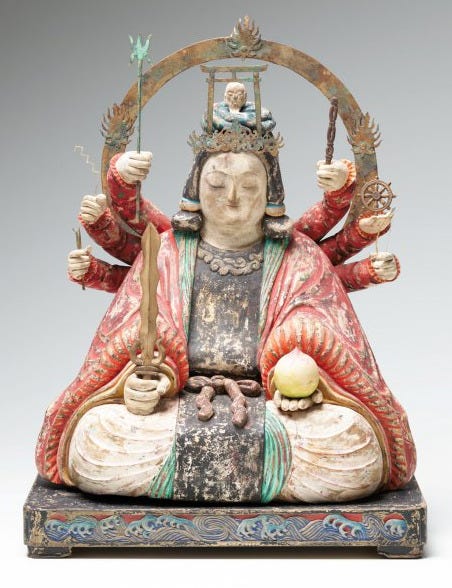
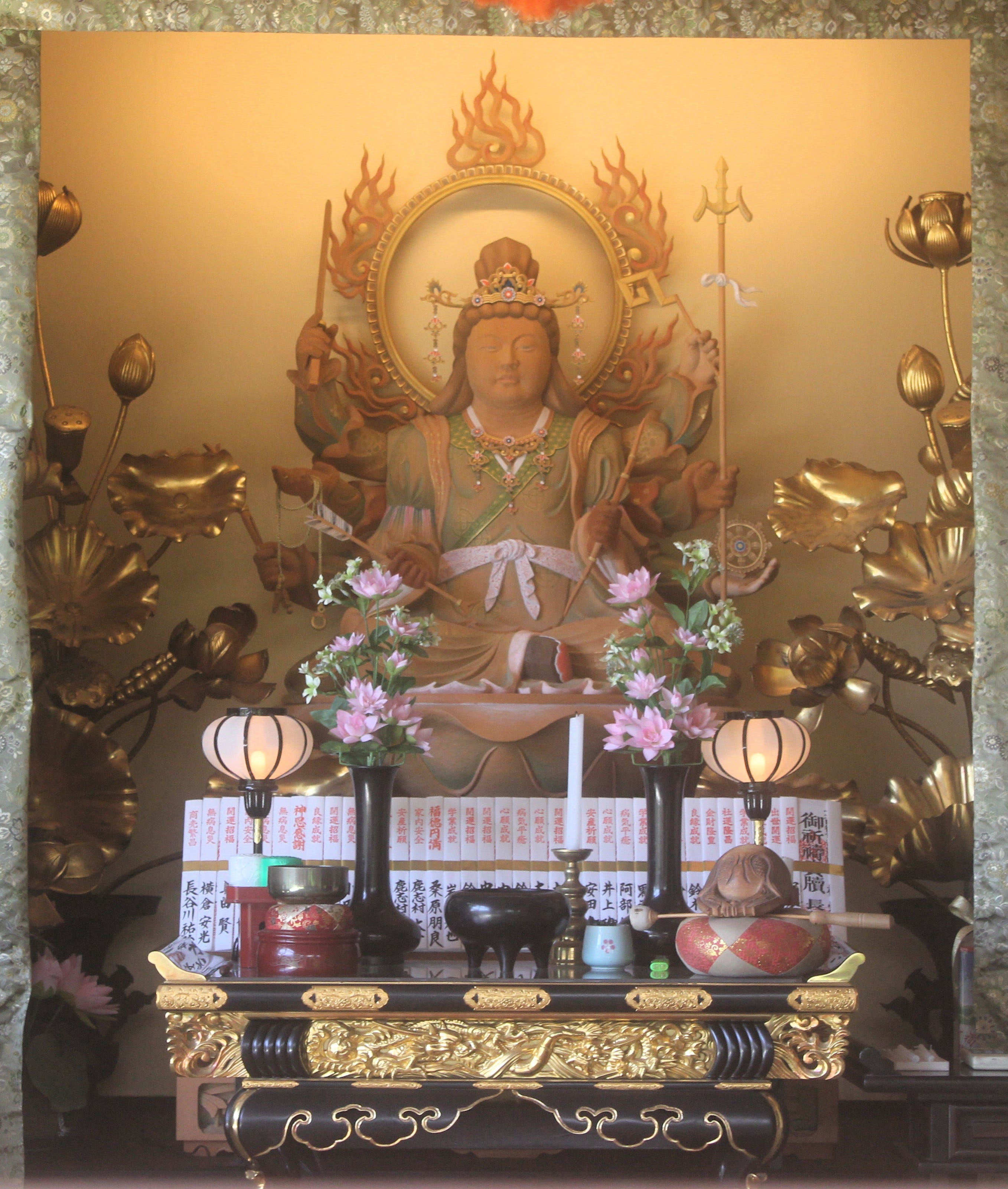
Benzaiten, also known as Benten, arrived in Japan via China in the seventh century as a Buddhist goddess originating from the Hindu river goddess Saraswati. Originally she was depicted holding an array of weapons and her role was to protect Buddhist law. Over time she also came to be associated with Shinto, particularly during the period of syncretic practice prior to the forced separation following the Meiji Restoration in 1868. Her worship was particularly widespread in esoteric Buddhism and Shugendo, which was a highly syncretic practice. In some cases Benzaiten was conflated with the Shinto kami Ugajin, a deity of the harvest and fertility, who is depicted with the head of an older male or female on the body of a snake. In this syncretic form she was known as Uga-Benzaiten and can be identified in art by having a torii and sometimes even the effigy of Ugajin, on her headdress (see image below). She was also conflated with one of the three Shinto Goddesses of Munakata associated with three ancient shrines located in Fukuoka Prefecture.
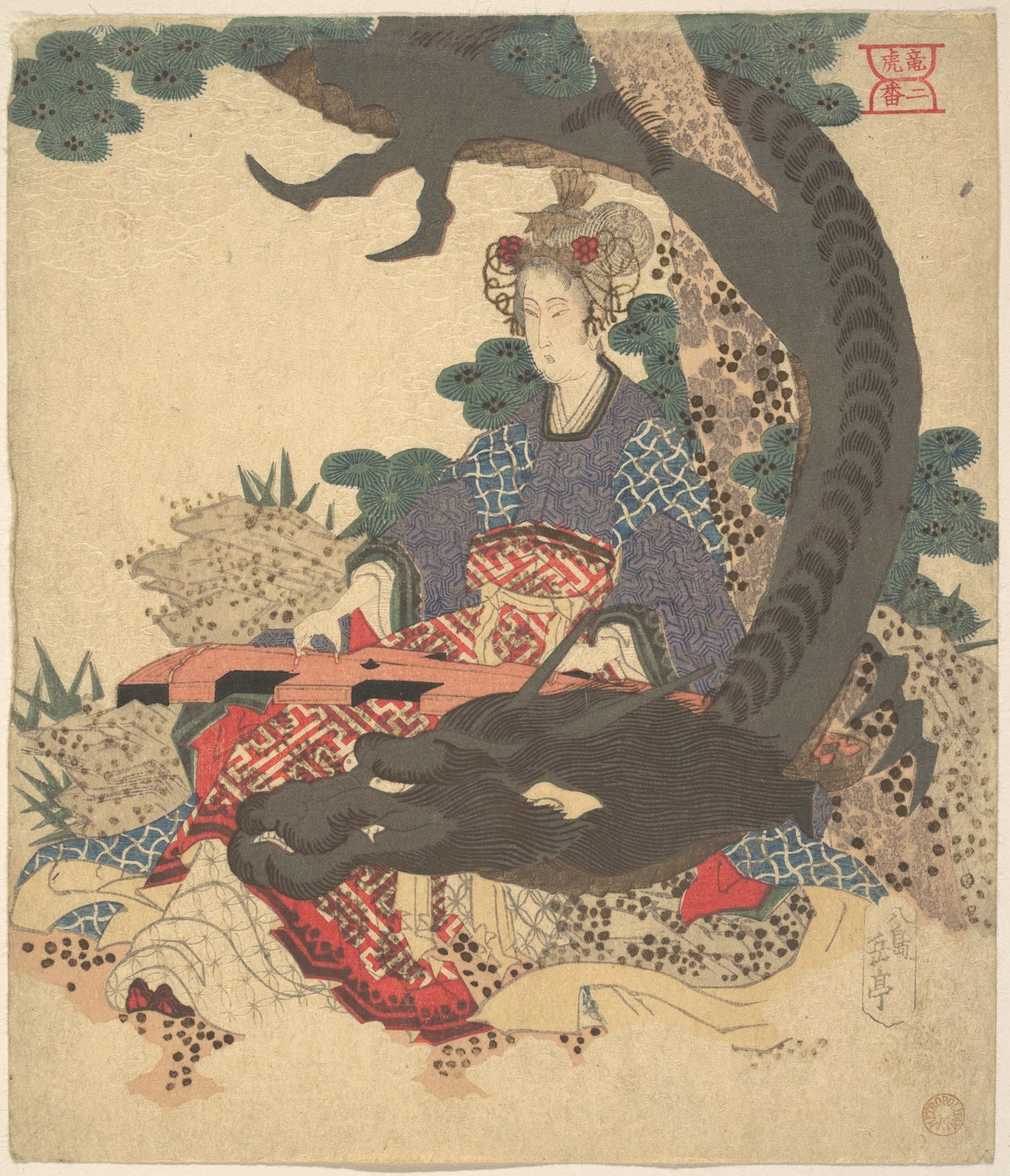
Her long association with water means she is often enshrined near lakes or the ocean. Being a water goddess means she rules over all things that flow including music, poetry, speech, learning, fertility, longevity, wealth and good fortune. Benzaiten is the patron of artists, writers and entertainers and is the only female member of the Shichi Fukujin (seven lucky gods of Japan). She is often depicted as a beautiful woman holding a biwa, a traditional Japanese stringed instrument. She is connected to both dragons and snakes, particularly white snakes, and both serve as her messengers. Benzaiten is one of the most popular goddesses in Japan today and is still widely worshiped, often in the hope of finding love or fortune, or both.
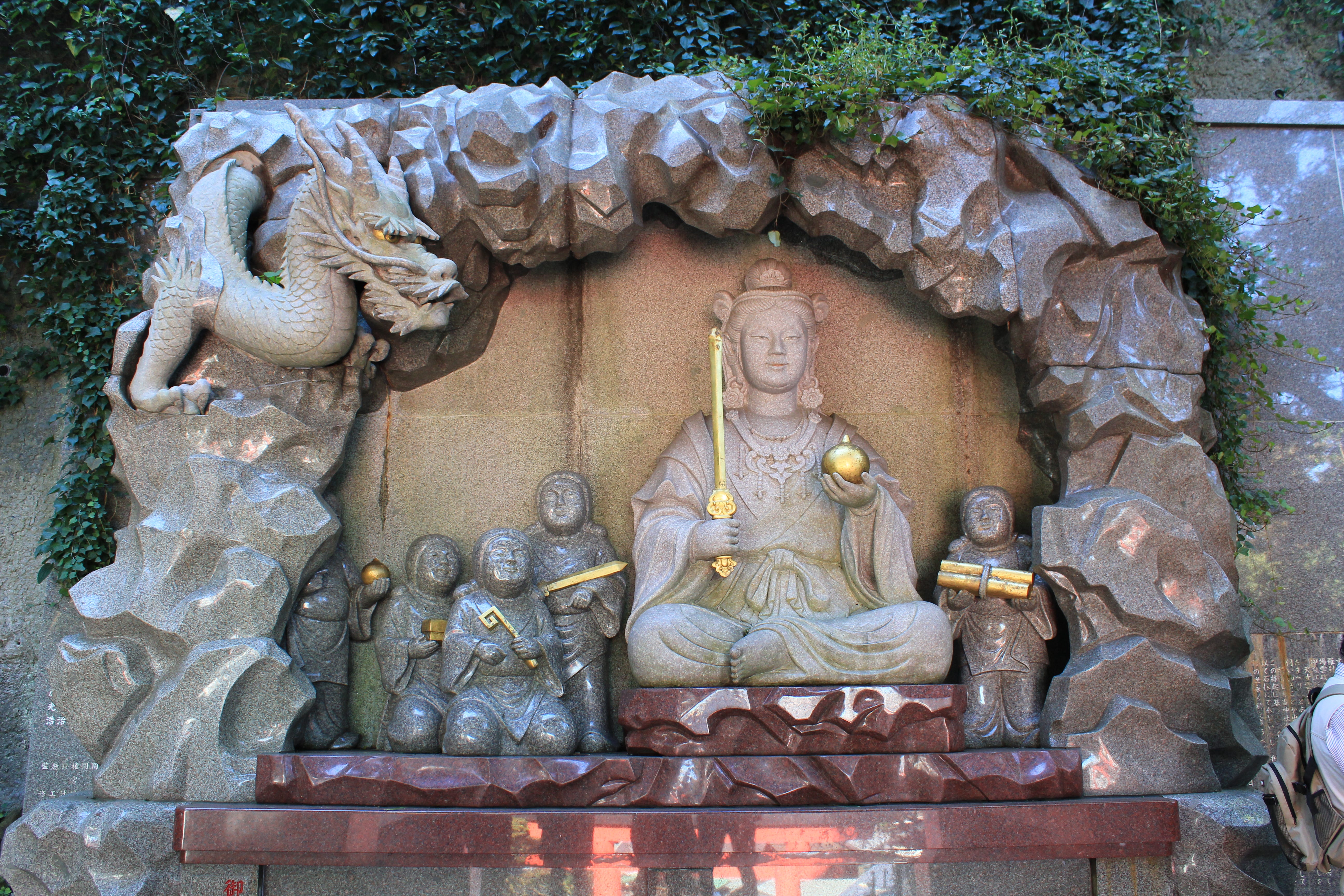
Benzaiten’s presence is particularly evident in the Kamakura area of Kanagawa, located an hour south of Tokyo. In Japanese folklore there are a collection of tales known as the Enoshima Engi featuring the goddess Benzaiten and her connection to a fierce dragon named Gozuru who terrorised the people along the coast of Kanagawa. The tale goes that when the dragon set eyes on the goddess he fell in love and wished to marry her. Benzaiten agreed, but only on the condition that he stop his violent behaviour. Some believe that she created Enoshima Island from the sea to contain the dragon, while in other versions of the tale she created the island as her home when she arrived in the area. It is also said that when the dragon died, he lay down and formed the shape of the coastline, while there are others who believe he lies beneath Enoshima to this day. Over time, both the dragon and Benzaiten came to be revered as protectors of the entire region.
My Pilgrimage
During my first visit to Japan, I spent time in both Tokyo and Kamakura and was fortunate to visit a number of shrines and temples dedicated to Benzaiten. At each of these fantastic places I discovered so much more about this fascinating goddess, so I wanted to share them with you.
Hase Dera, Kamakura
The popular Hase Dera complex is a Buddhist temple dedicated to the goddess Kannon. Usually thick with tourists, during my visit it seemed the typhoon had kept many people away and consequently I had the place almost to myself. Remarkably, the gardens had been cleared of debris and were looking spectacular despite the still relatively early hour. The complex included a Benten-do Hall with a typically Buddhist representation of the goddess (pictured below).
Despite Hase Dera being a Buddhist temple complex there was also a Shinto shrine dedicated to Benzaiten found inside a cave within the grounds. Entering the cave was a remarkable experience. Statues of the goddess were carved into the rock walls in what could only have been an act of complete reverence and devotion. I felt like I was in the presence of something that rivalled the finest cathedrals in Europe and as the water dripped and echoed around me I felt a kind of spiritual peace. There were also several other caves connected by narrow passageways, one that allowed visitors to purchase a small statue and place it with hundreds of others and make a wish or request of the goddess.


Zeniarai Benzaiten Shrine, Kamakura
Zeniarai Benzaiten Shrine is located about a twenty-minute walk out of the centre of Kamakura. At the top of a fairly steep incline, a torii appears against a rock wall on the side of the road beyond which is a passageway that felt reminiscent of Ghibli’s ‘Sprited Away’. Apparently the shrine is on the site of what was once a secret village that was hidden by rock walls on one side and thick forest on the other. Walking through the rock tunnel, the wind seemed to pull me forward and sounded like a choir of ghosts calling me into another world. The shrine itself was interesting to explore and there were images of Ugajin, the snake-bodied kami mentioned earlier. The major draw-card for tourists was a cave where you can place your money in small baskets and wash it with the spring water, a ritual that is believed to increase your wealth.


Enoshima Island, Kanagawa
Enoshima is an island just off the coast of Kamakura, connected by a bridge, that has long been a pilgrimage site. This is famously depicted in the ukiyo-e print below by woodblock artist Utagawa Hiroshige.
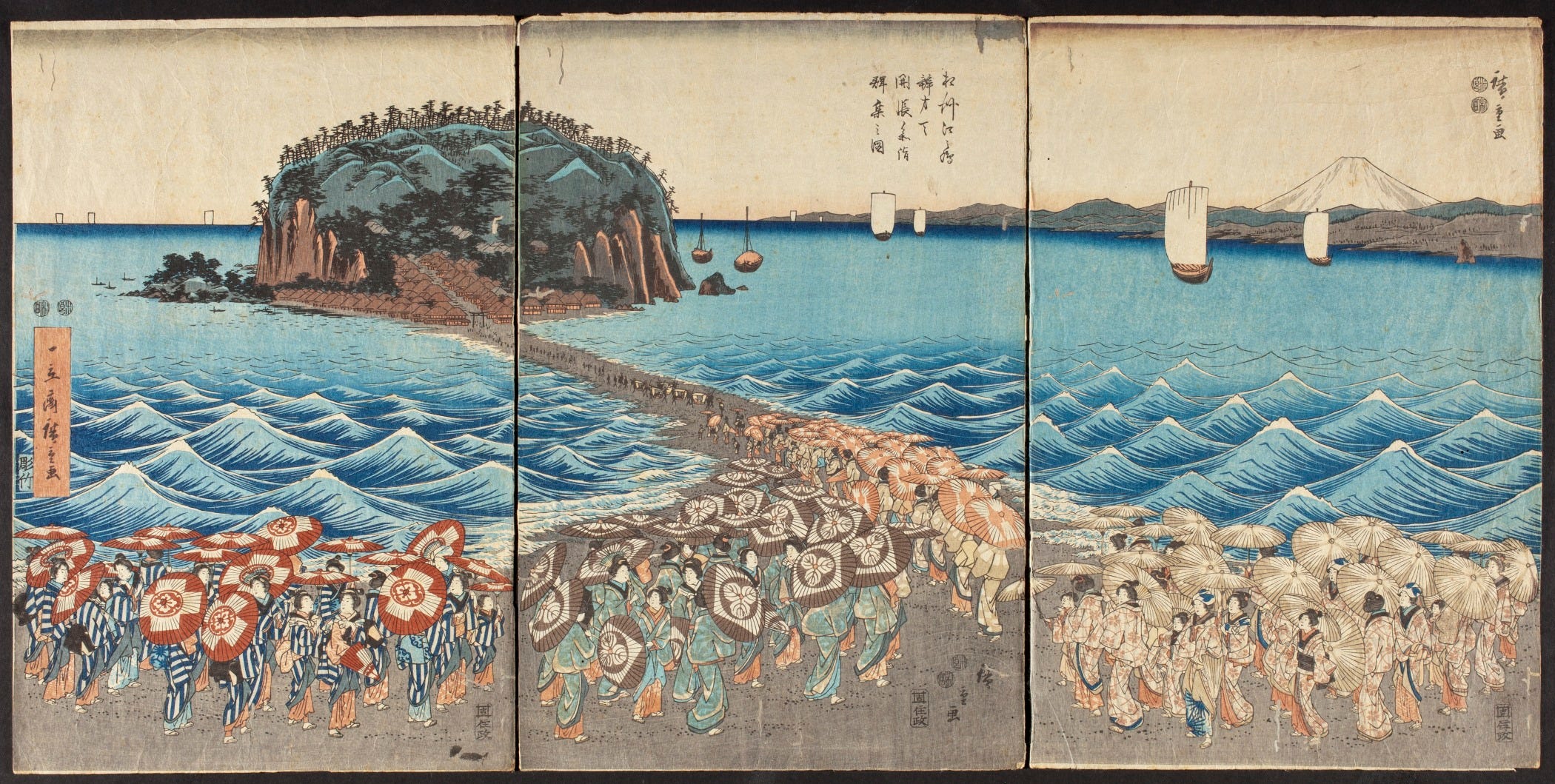
The island has an extensive shrine complex that has a history dating back to 552. A notable feature of the island and its shrines is that there are dragons everywhere, from the statues that guard the pedestrian bridge over the island, to the shrine guardians and elaborate dragon-styled fountains. From the bridge there is a street leading to the shrines that is lined with shops and restaurants and is known as Benzaiten Shopping Street. The impressive gatehouse at the end is apparently modelled on the undersea palace of Ryujin, the Dragon King.


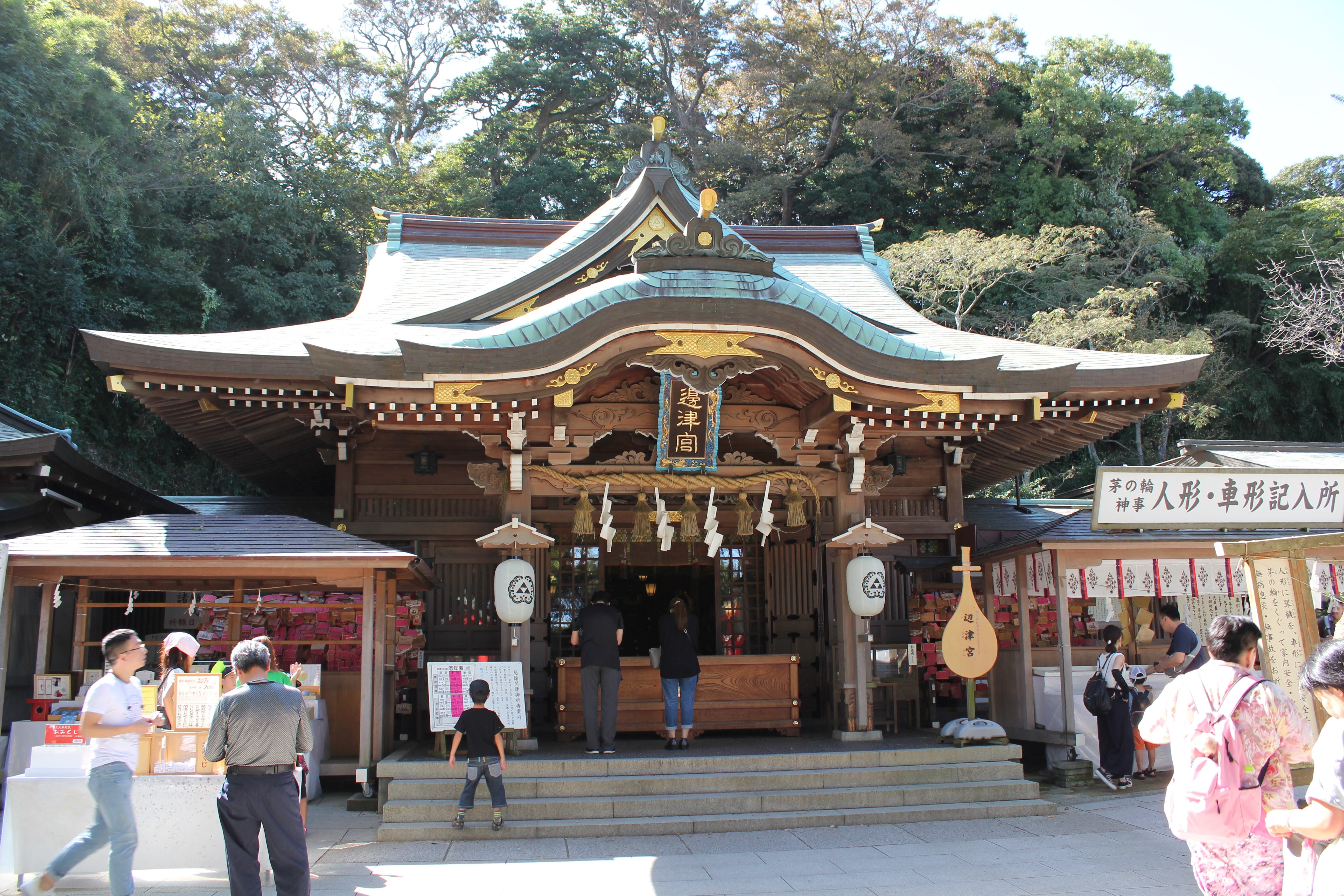
The Enoshima Shrine is considered one of the three great shrines of Benzaiten. In this case the complex enshrines the three Munakata goddesses mentioned earlier. Benzaiten is often conflated with one of these goddesses called Ichikishimahime. There are three shrines in the complex, each dedicated to one of the three goddesses. The Hetsumiya Shrine enshrines Benzaiten and also houses two statues of the goddess. One is a Myoon (or naked) Benzaiten which represents her role as a goddess of the arts. The other, known as Happi Benzaiten, depicts her with eight arms, weapons and an effigy of Ugajin on her head, and it represents her role as a protector and goddess of war and good fortune.
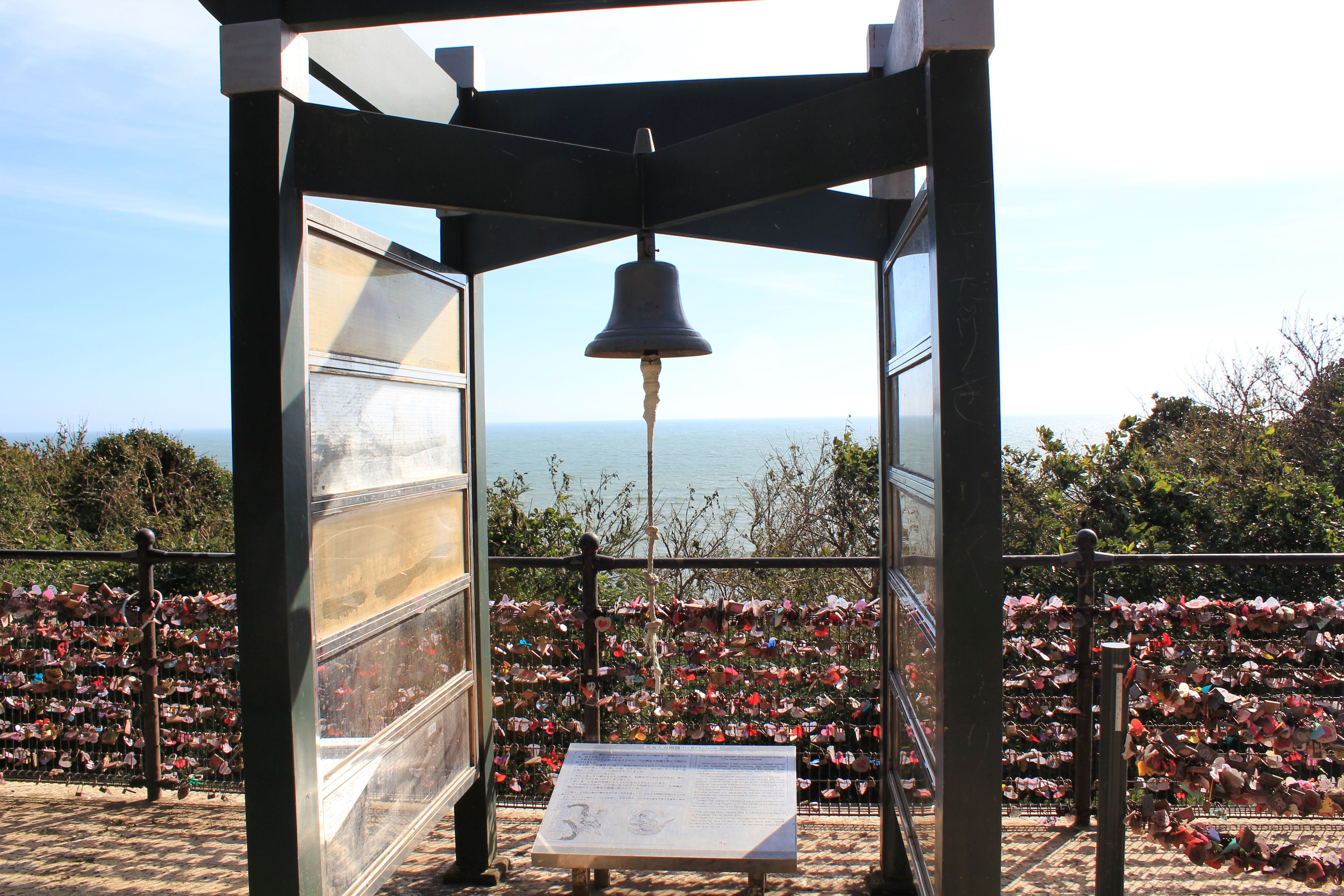
Further onto the island is the Ryuren Bell of Love, an area facing the sea where couples attach padlocks with their names on them and ring a bell together before throwing the keys into the ocean. This is done in the hope that Benzaiten will ensure their love is everlasting. On the far ocean side of the island are a series of caves believed to house the dragon. Unfortunately during my visit they were closed due to damage caused by the typhoon and the danger posed by the still-wild seas crashing into them. For me, this is a definitely a reason to make sure I return again.
Mount Takao, Tokyo
Mount Takao is a remarkable place with a long history connecting it to a yokai (supernatural creature) known as Tengu which I hope to write more about here soon. Yakuo-in is a temple complex on the mountain related to a syncretic form of esoteric Buddhism influenced by both Buddhism and Shinto. The prime deity connected to the temple is Izuna Daigongen who was seen in a vision by one of the founding priests on the mountain and was called on for protection. Izuna Daigongen contains elements of five different deities, one being the goddess Benzaiten, who at the time was viewed not only as the goddess of water and music, but also of victory in battle. The temple complex is also home to a small but remarkable Benzaiten Shrine, once again found within a cave. The entrance to the cave is up a steep flight of stairs and pilgrims need to bend over and scramble along a path that leads to an altar to the goddess, deep within the mountain. The tunnel is sparsely lit and the echo of water dripping from the roof onto the rock below produces an eerily magical effect.


Ueno Park, Tokyo
Within Ueno Park in Tokyo lies the busy Shinobazu-no-ike Bentendo, a Buddhist temple dedicated to the goddess Benzaiten. The temple is located on an island in the middle of Shinobazu Pond which is often covered in a sea of lily pads. It is accessed by walking over a footbridge lined with food vendors. Once at the temple visitors can choose an omikuji, or fortune, and find out what their luck looks like. Omikuji that are positive can be kept, and those not favourable can be tied to the wires and another purchased instead. Symbolically I love the idea that we can respect fate but that we are not bound by it, and with proper diligence we can avoid poor ‘luck’ and create a better reality for ourselves.


This is just a small selection of Benzaiten shrines that I was lucky enough to visit. I hope to return to Japan again and explore more. If you are interested in doing further research about this fascinating goddess, I would recommend starting at this amazing website. In the syncretic tradition of Japanese religions there are many layers to discover in understanding Benzaiten’s journey from the Hindu Saraswati to the beloved goddess of modern Japan.
This newsletter is completely free and I do not offer paid subscriptions. If you enjoyed this article and would like to support my work, donations will be most gratefully received via Ko-fi.
Thank you your evocative writing and descriptions have helped me with my research on Benzaiten. Very much appreciated!
This is a treasure. thank you. :)