
Momijigari
Hunting for autumn leaves in Japan

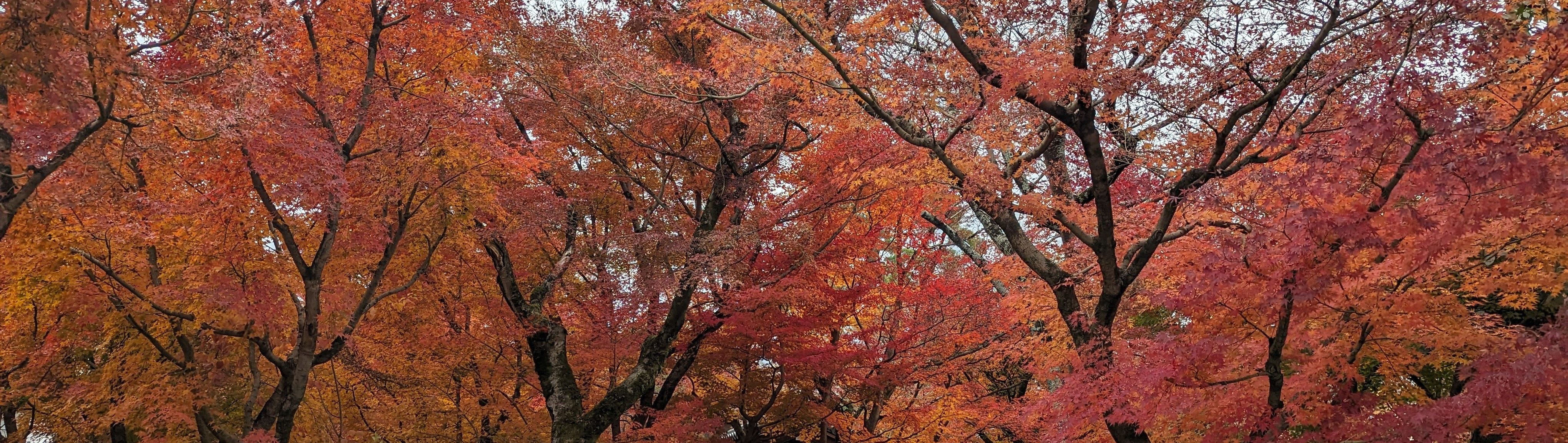
In Japan, momijigari (紅葉狩り) is a time for viewing the beautiful autumn leaves as they change colour. The word momiji means red leaves and gari means to go hunting so a more literal translation, and one I prefer, is autumn leaf hunting. Rather than just the act of passively viewing, there is an implication that one goes exploring in search of the stunning autumn leaves. Where I live, we don’t have four distinct seasons like Japan and much of the northern hemisphere. Here, I am surrounded by evergreen trees and so autumn in Japan seems particularly magical to me. My last trip to Japan was during November and December in 2023, and I loved every minute of it. While there, I embraced momijigari. Each new scene was an opportunity for me to observe the vibrant autumn colours and to hear the crunching of fallen leaves under my feet. It was such a novelty that I felt like a small child again.
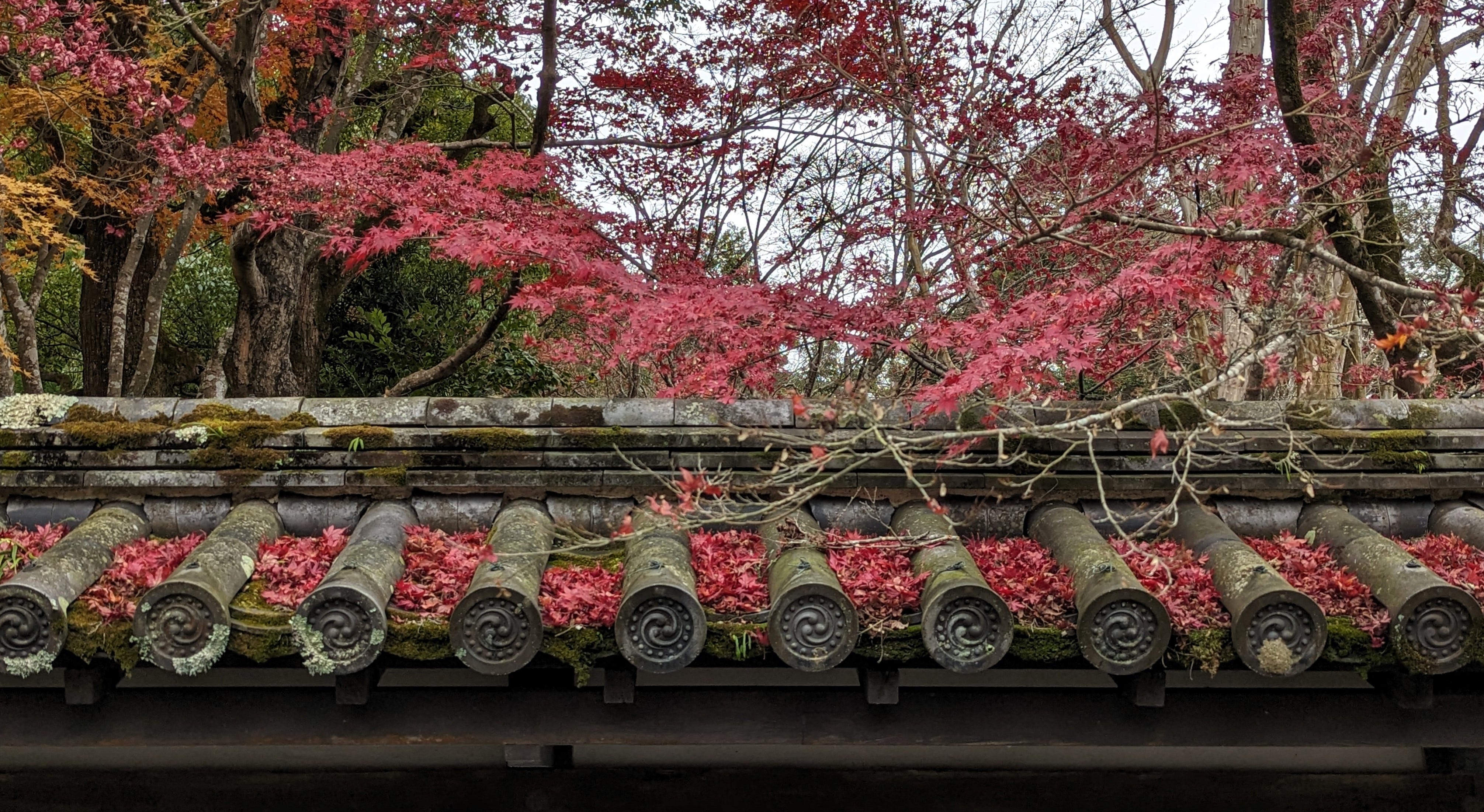
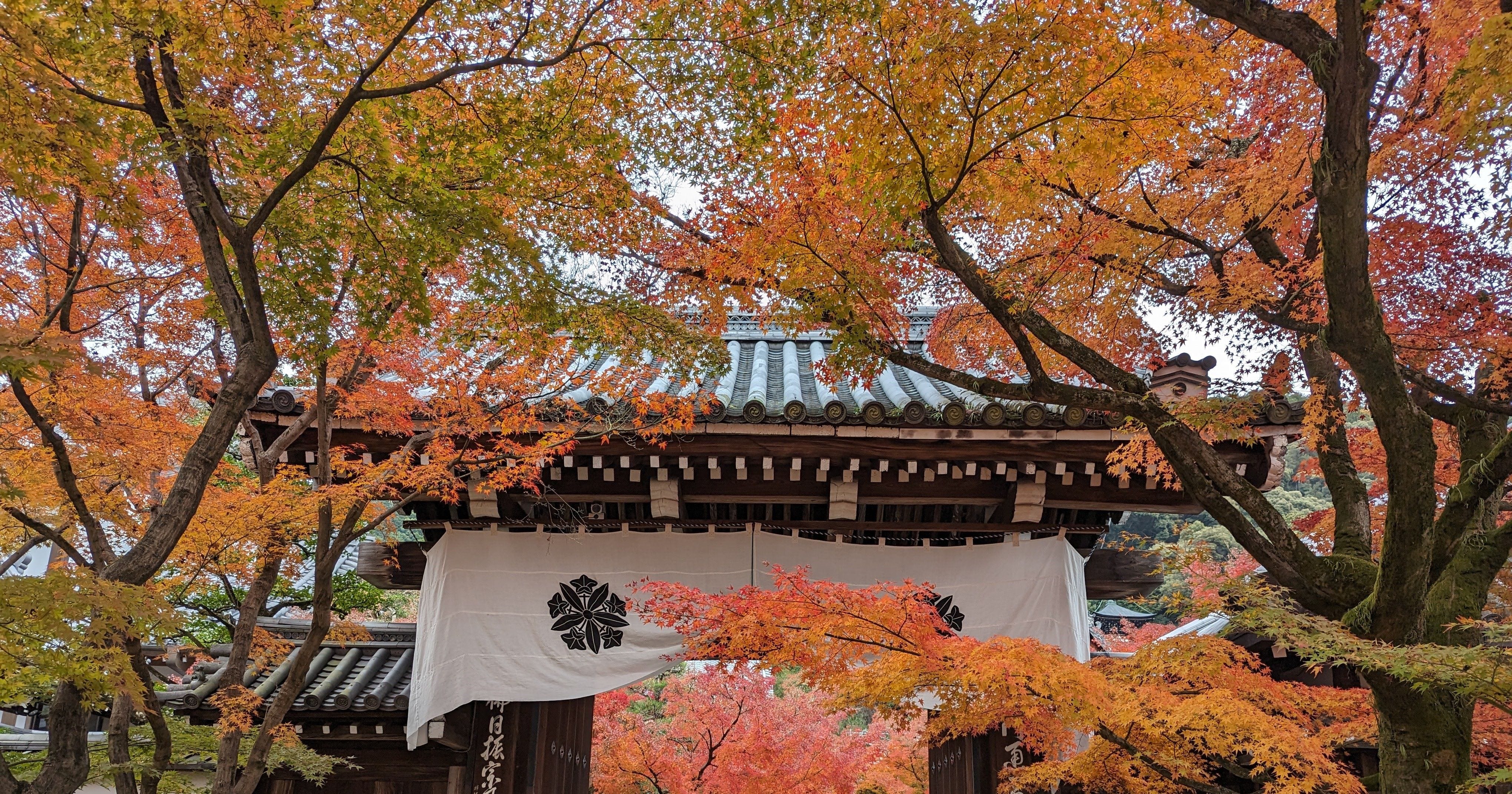
Autumn is such a wonderful time in Japan and while I could write about the many festivals and celebrations that occur during this season, in this article I will be focusing just on momijigari. I will share a traditional tale, a yokai connected to ginkgo trees, some photographs of my last autumn trip to Japan, and a selection of Japanese prints and poetry inspired by momiji. I hope you enjoy this little taste of autumn in Japan.
Momiji
In Japanese theater there is a very famous tale about Princess Sarashina that is also known as Momiji. There are many variations of the tale across time with one of the earliest being a noh play titled momijigari. The same tale was also made into a kabuki play and later in 1899 it became Japan’s first narrative film (I’ve included a link to a section at the end of this article). The character known as Momiji was actually powerful kijo, which is a female oni, or demon-like creature in Japanese folklore. The story takes place during autumn, when the leaves begin to change colour and people go out to view them.
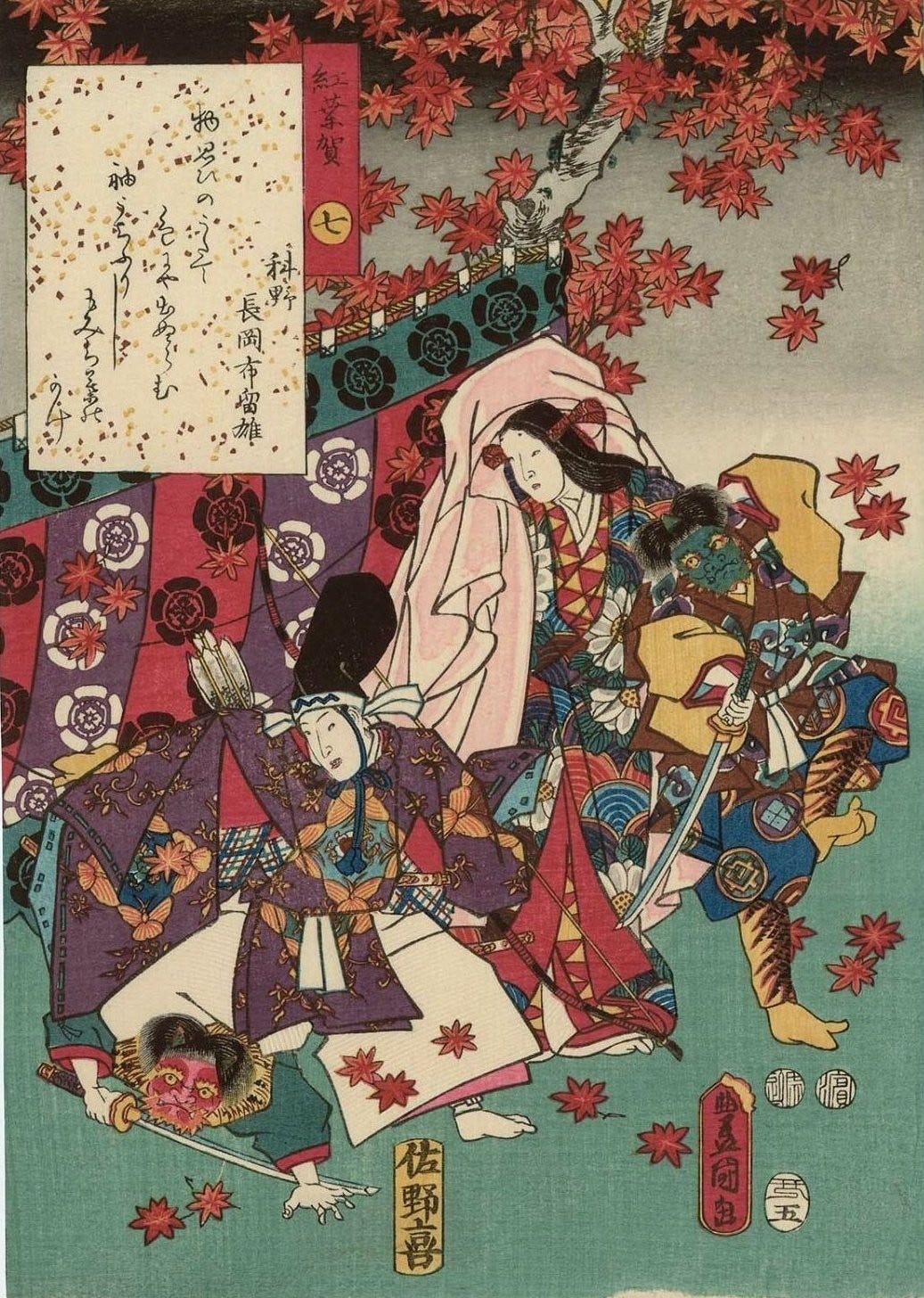
It begins with the samurai Taira no Koremochi who was given the task by the local Hachiman shrine of hunting and killing oni in the nearby mountains. He set off travelling with his retainers when they came across an autumn leaf-viewing party. They were told that it was being hosted by Princess Sarashina and were requested to join. Despite wanting to press on, out of politeness, Koremochi agreed to join the party. Later that evening as the group were enjoying themselves drinking sake and watching the dancing, Koremochi asked the princess to dance for him and she agreed. They all became drunk and sleepy, dozing off under the trees.
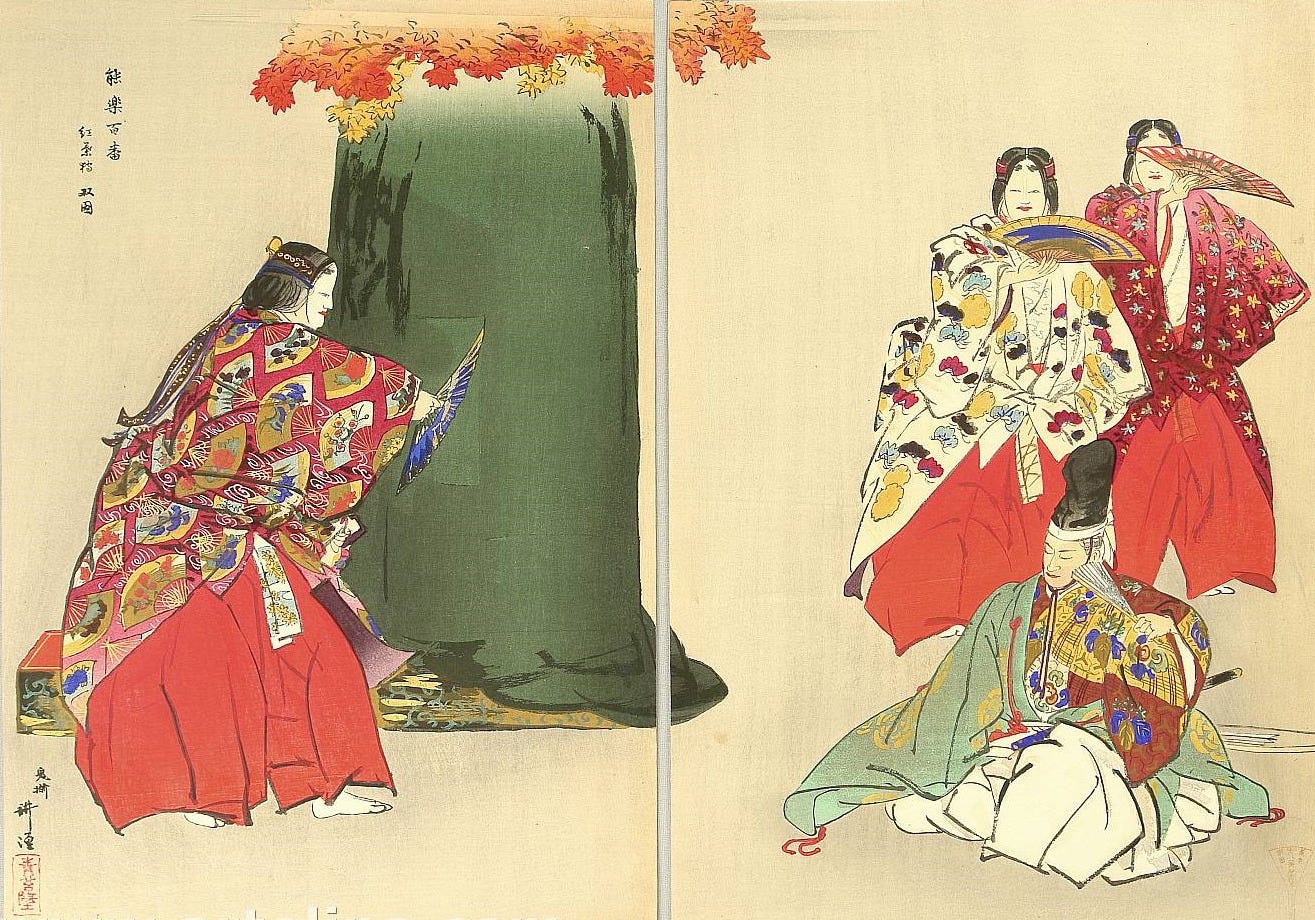
While asleep Koremochi had a dream in which the god Hachiman appeared and told him that in fact the princess was actually a powerful kijo called Momiji in disguise. In the dream, Hachiman also told him that he should kill her with a magical katana (sword) with the title kogarasumara, which translates as ‘little crow.’ When Koremochi woke he was surprised to discover that the sword from his dreams was in his hand. He immediately went to find the princess and while searching, a huge firestorm broke out. Instead of the princess, an enormous kijo with flaming horns appeared. They engaged in a fierce battle and fortunately Koremochi was able to defeat and kill the demoness using the magical sword.
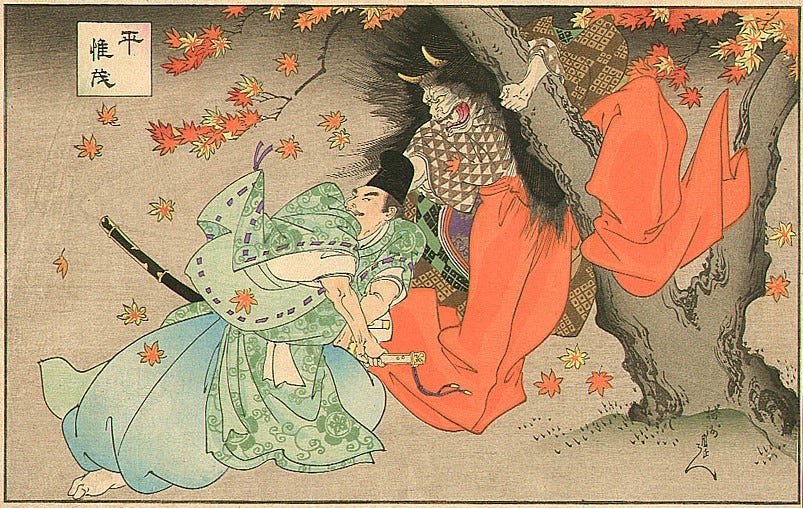
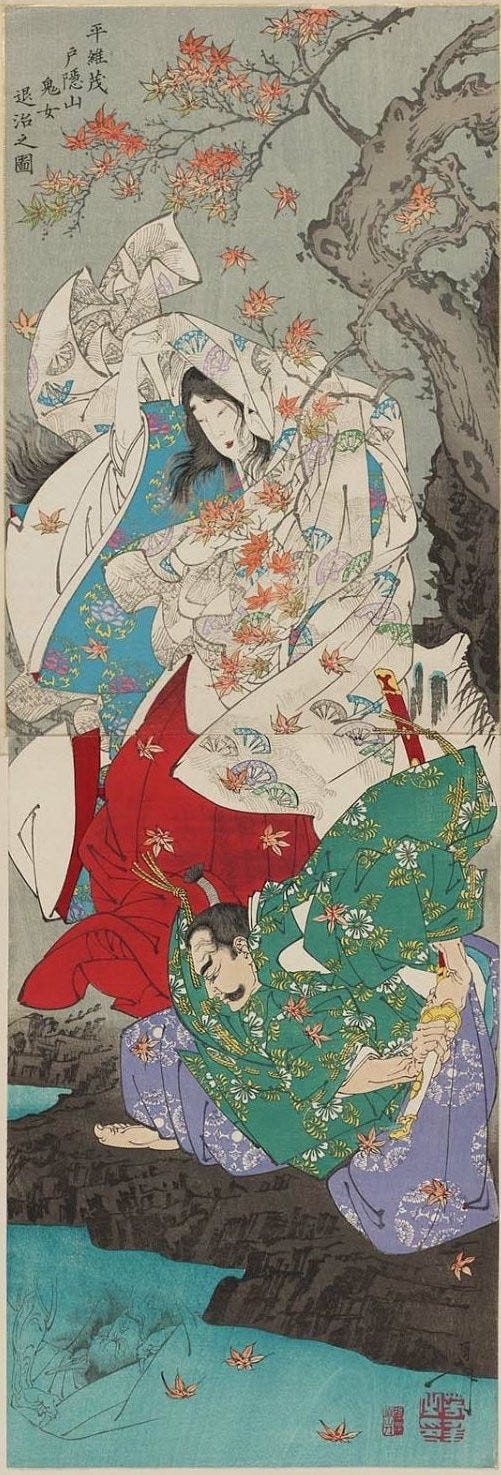
Momijigari was a popular subject for ukiyo-e prints and I have included a selection above. The final print below is one of my favourites. It is a vertical diptych that shows the princess Sarashina at the top of the print among maple leaves but if you look closely you can see how Koremochi is looking at the kijo’s true face reflected in the water below.
Ginkgo Trees and Yokai
If you visit Japan in Autumn it won’t just be red leaves you will see. The vibrant yellow of ginkgo trees are also a magical sight. Ginkgo are considered sacred trees and are often planted in shrines and temples. It is considered bad luck to plant one in your home as apparently if it overshadows the house, the occupants lives will be shortened. And if the roots grow under the house it can cause illness and great misfortune for those who live there.


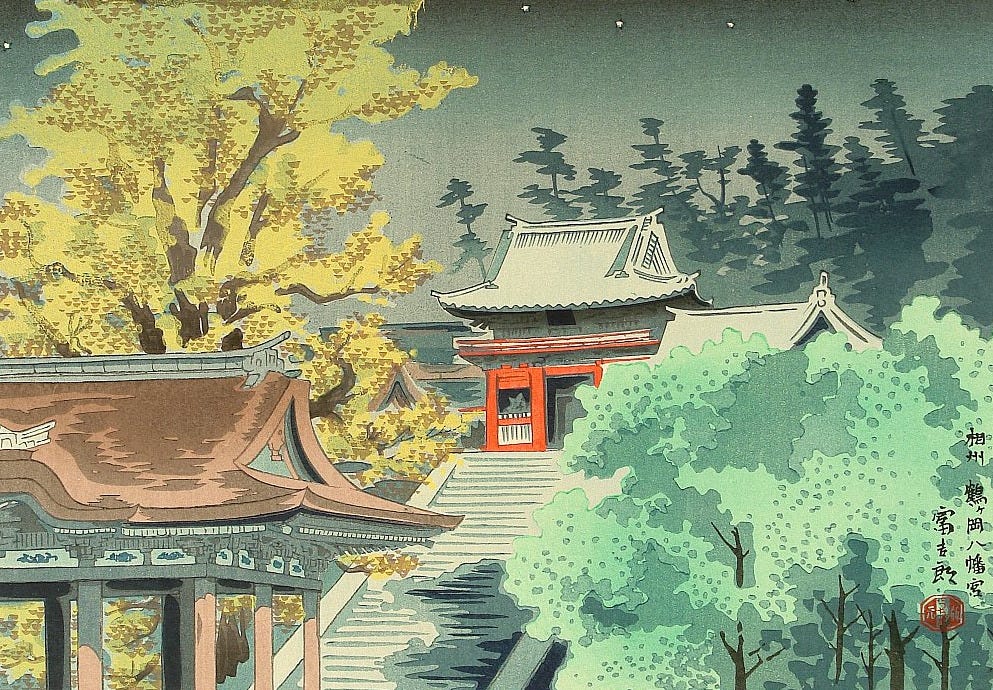
There was a famous ginkgo tree said to be over 1000 years old on the grounds of Tsurugaoka Hachiman Shrine in Kamakura. Tragically in 2010 a storm brought the tree down. The trunk of the tree was moved and re-planted nearby and some time later it started to shoot again. A new tree was also planted near where the original one came down. The print below on the left shows what the original tree looked like. The centre photo was taken during my visit in 2018 and you can see the replanted trunk (blue arrow), the area where the original tree grew (yellow arrow) and the new successor tree that was planted (green arrow). I took the final photo during my autumn visit in 2023 and you can see the new tree is growing well, although it obviously has a long way to go to match its predecessor.


The original tree is connected to a legend in which it was known as the hidden ginkgo. I have read several versions of the legend and in one an assassin, Minamoto no Yoshinari, hid behind the tree waiting for his target, the Shogun Minamoto no Sanetomo. Apparently Yoshinari wanted to become the next Shogun and so as Sanetomo he was walking down the stone steps, he jumped out from behind the tree and killed him. In another version, it seems that after Yoshinari killed Sanetomo he then hid behind the tree to avoid being detected. Apparently he was startled by the ringing of a gong and jumped, giving away his location, and this resulted in his death. The print below shows the stone steps and ancient ginkgo tree at Tsurugaoka Hachiman Shrine where the legend is said to have taken place.
Connected to this legend is the Bake Icho no Sei, a yokai believed to be the spirit of ginkgo trees. This yokai was fist depicted in the Buson Yokai Emaki, an 18th century picture scroll, and based on that source not much was known about it. Later, yokai artist and folklorist Shigeru Mizuki included it in one of his yokai encyclopedias and at this time it appeared bright yellow, the colour of ginkgo leaves in autumn. It is said that Back Icho no Sei appear near gingko trees wearing tattered robes and hitting a mallet against a gong. I can only assume that the legend of the hidden gingko somehow influenced this depiction. Thankfully other than scaring people out of their wits, Bake Icho no Sei are not actually harmful.


Hunting autumn leaves in Japan
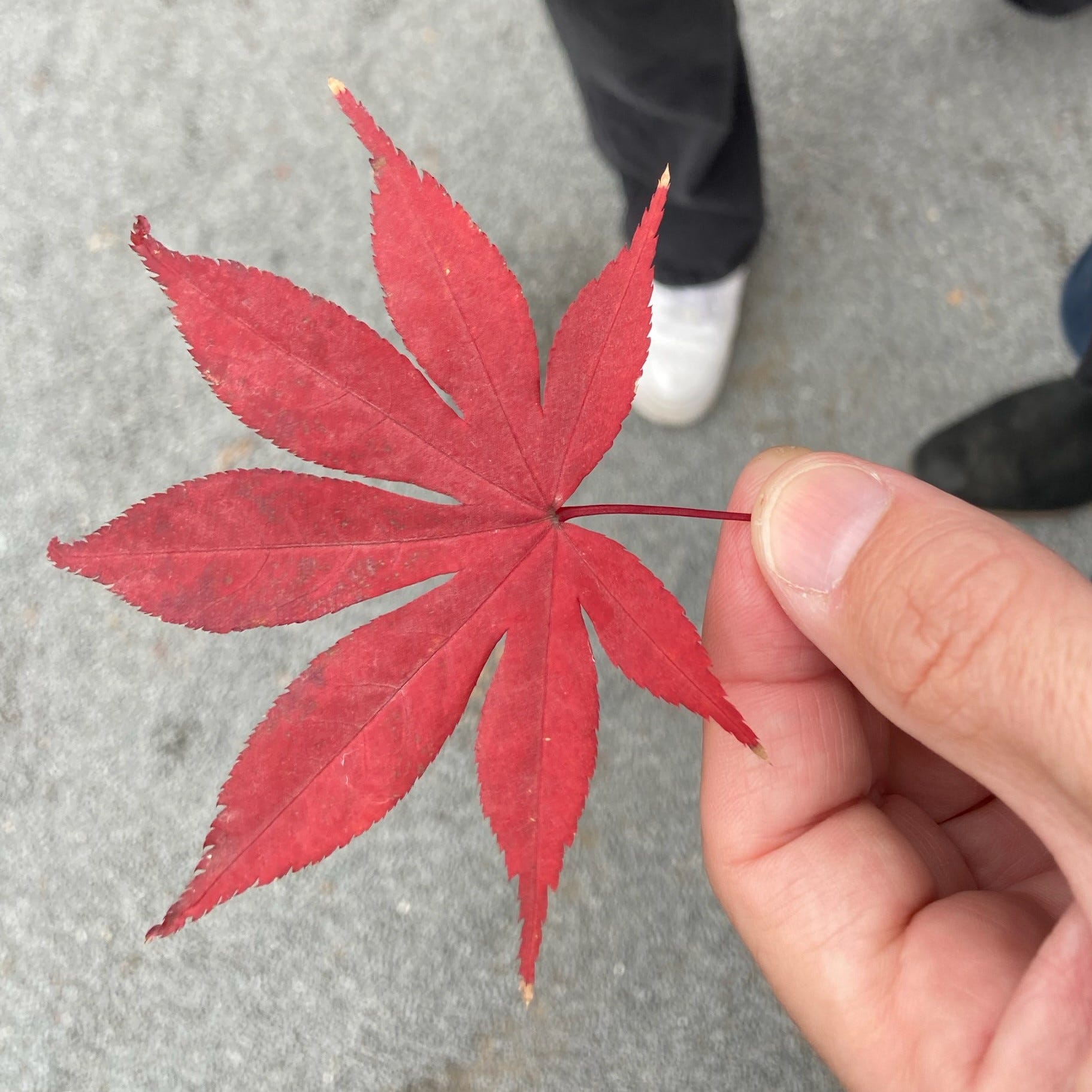
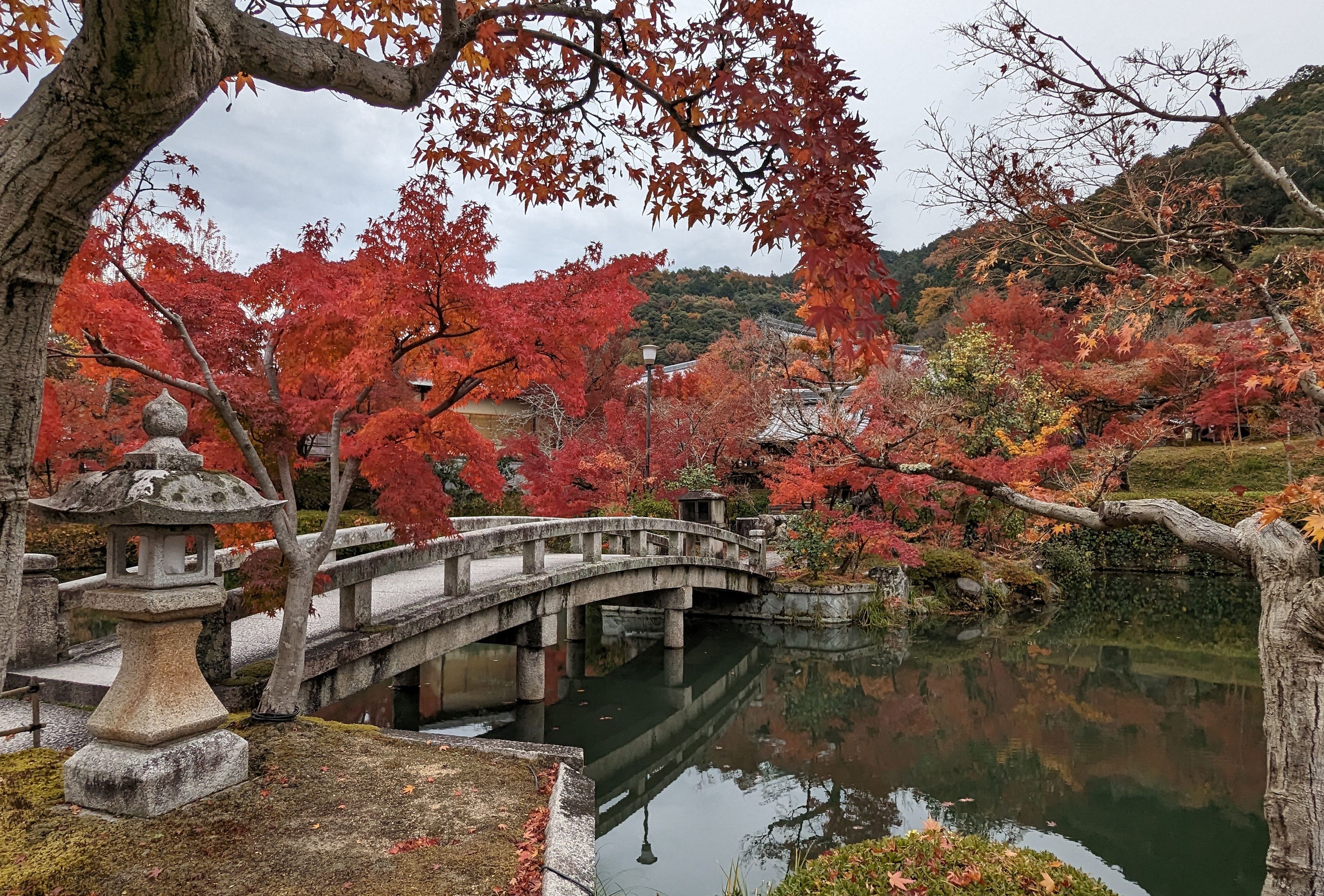
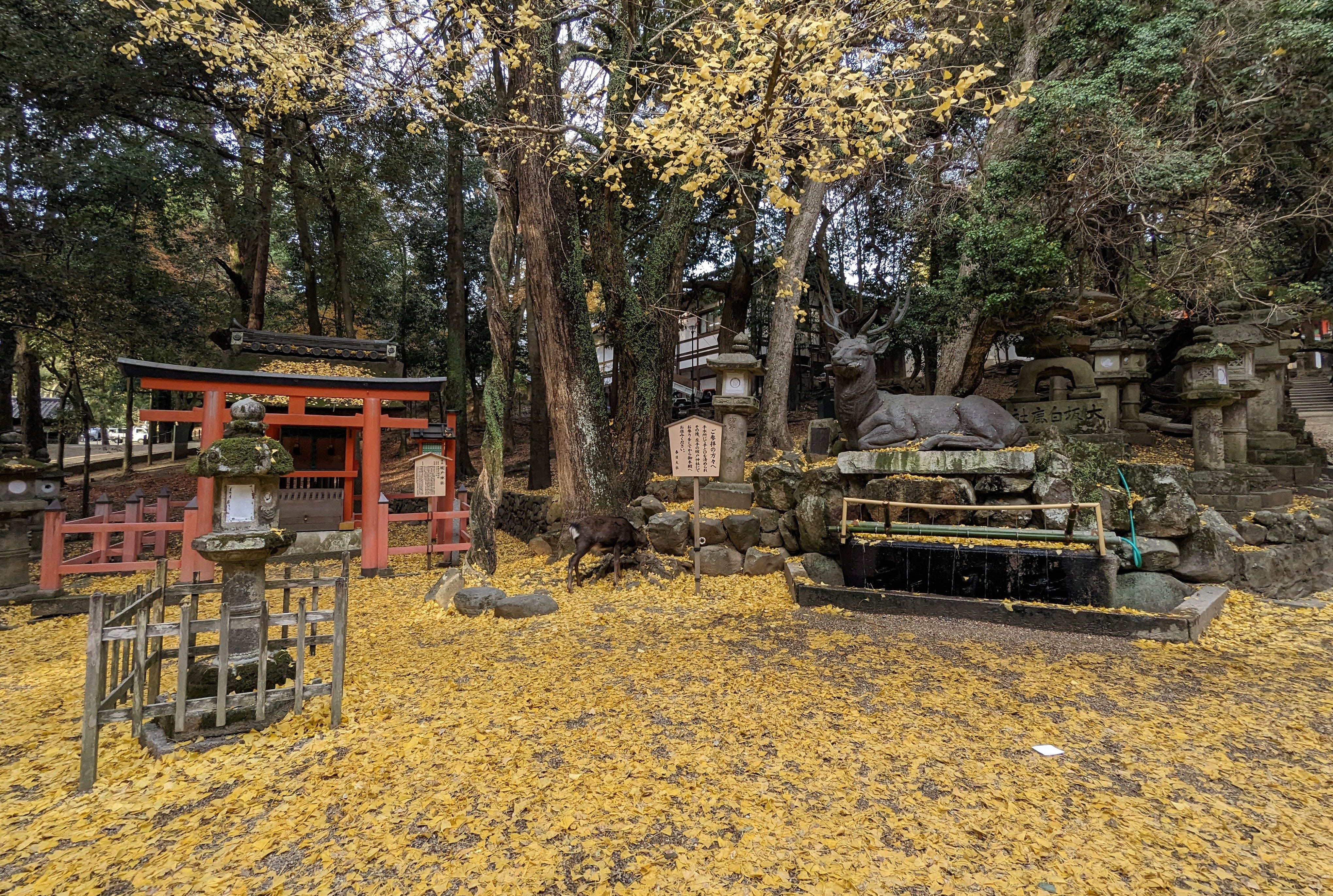
Autumn is a wonderful time to visit Japan. Not only are the colours stunning, but the weather is generally clear and not too cold, and the crowds are smaller than during hanami (cherry blossom viewing season). As I mentioned, travelling at this time was a huge novelty for me and I definitely embraced the concept of momijigari. If you’d like to do some virtual autumn leaf hunting with me, I’ve included below some of the photos I took on my last trip.
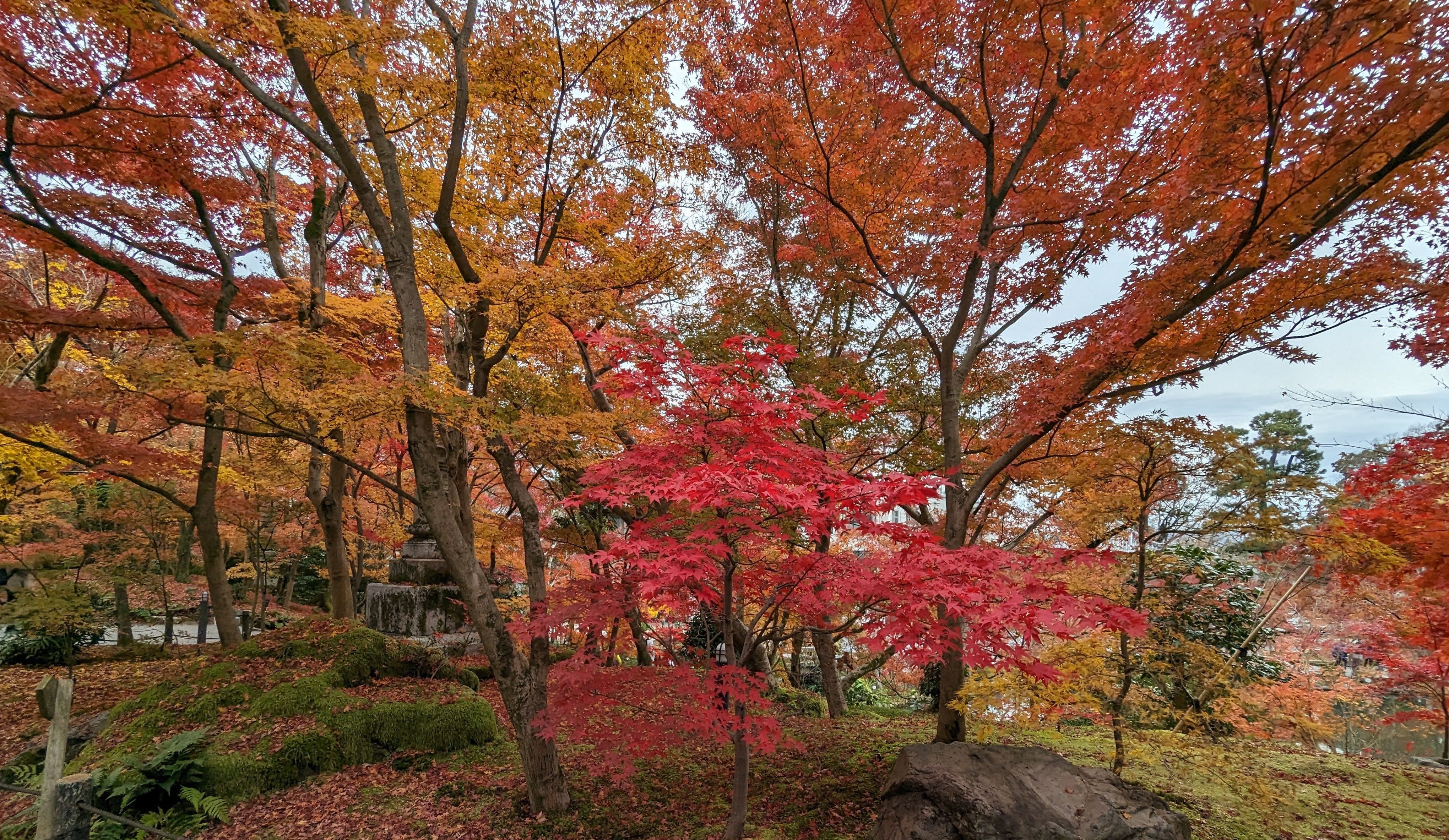
Gotokuji Temple in Tokyo is also known as the temple of the maneki neko (lucky cat). The grounds are stunning and the colours were amazing. The contrast between the evergreen trees and autumn colours was so beautiful.
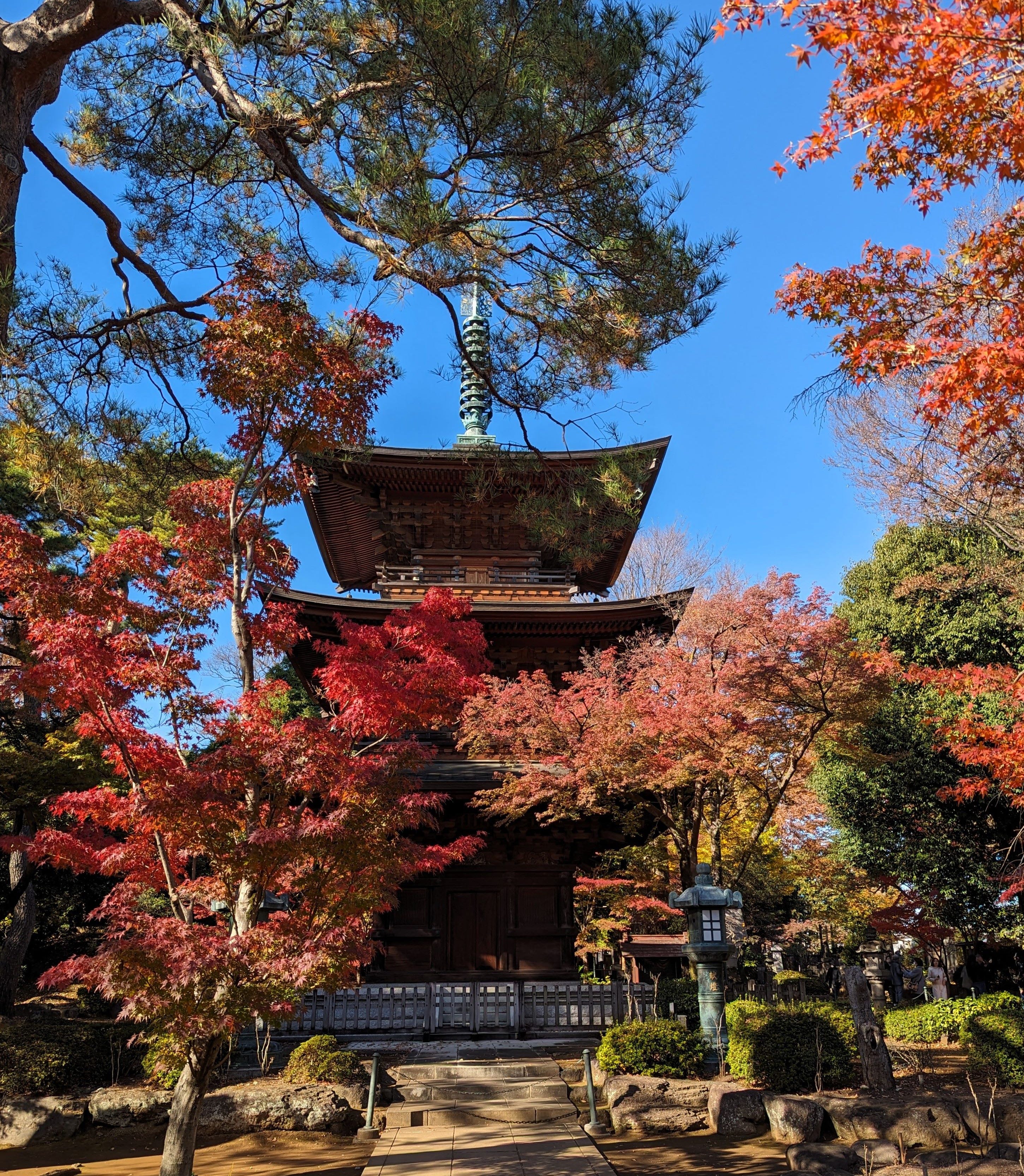
Kiyomizu-dera is one of Kyoto’s oldest and most famous Buddhist temples. In summer, the view from the temple is a vibrant green and you can see how it is completely transformed in autumn. It is a perfect spot to visit to see how different seasons can change the experience of a place.


Eikando Temple in Kyoto is famous for its spectacular autumn foliage, especially the maples. The temple is located along the Philosopher’s Path and it was one of my favourite stops along the way.
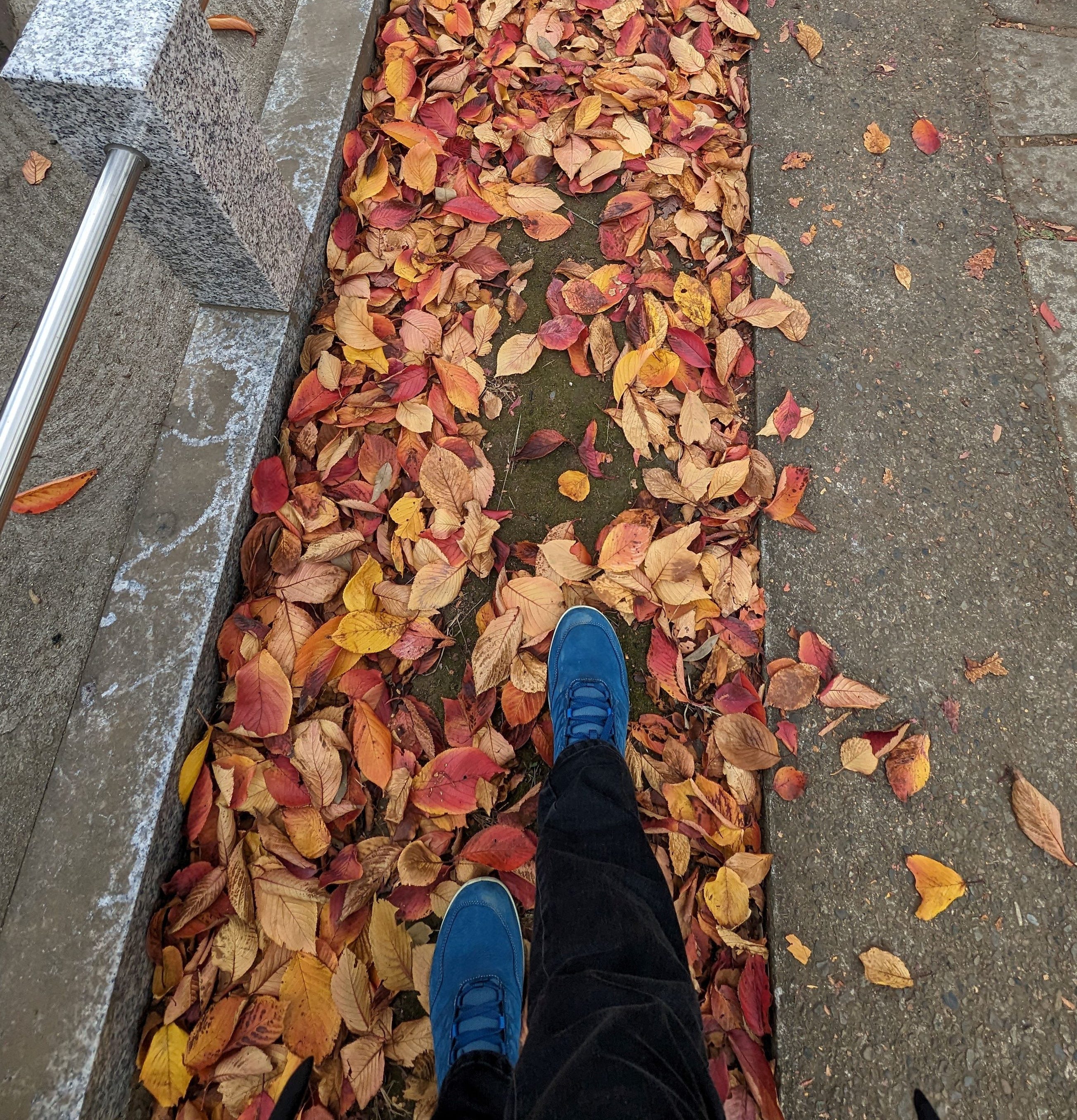
Even after the leaves have fallen, the effect is still magical. In Japan, deer are often associated with autumn and the photo below was taken at Kasuga Taisha in Nara, where many deer wander around freely. You can see the carpet of golden, fallen leaves and statue of a deer, but can you also see the real deer nearby?
Just in case you love autumn colours as much as I do, or if you are also in a place where you don’t see this kind of seasonal change, here are a few final photographs to enjoy.


Autumn in Japanese Art
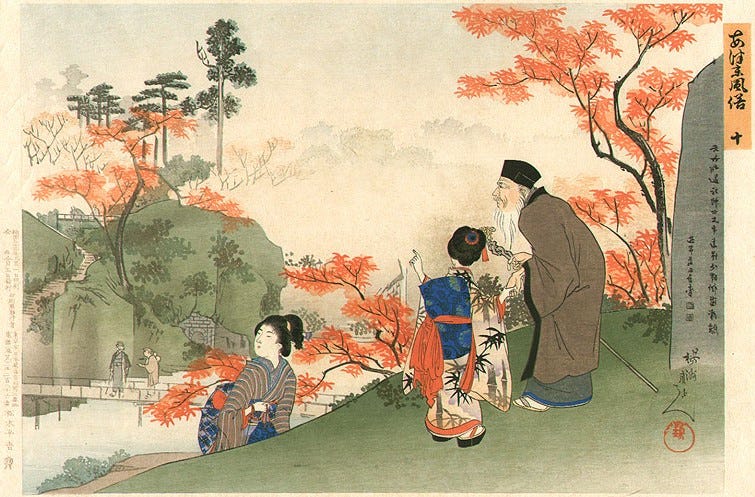
After seeing the display of gorgeous autumn colours it will be no surprise that they have inspired equally stunning art. I am particularly partial to woodblock prints and will share some examples below, but you can also find silk paintings, netsuke, urushi (lacquerware) and kimono inspired by autumn. The first print below actually depicts momijigari, as people gather on the banks of a river to admire the changing leaves.
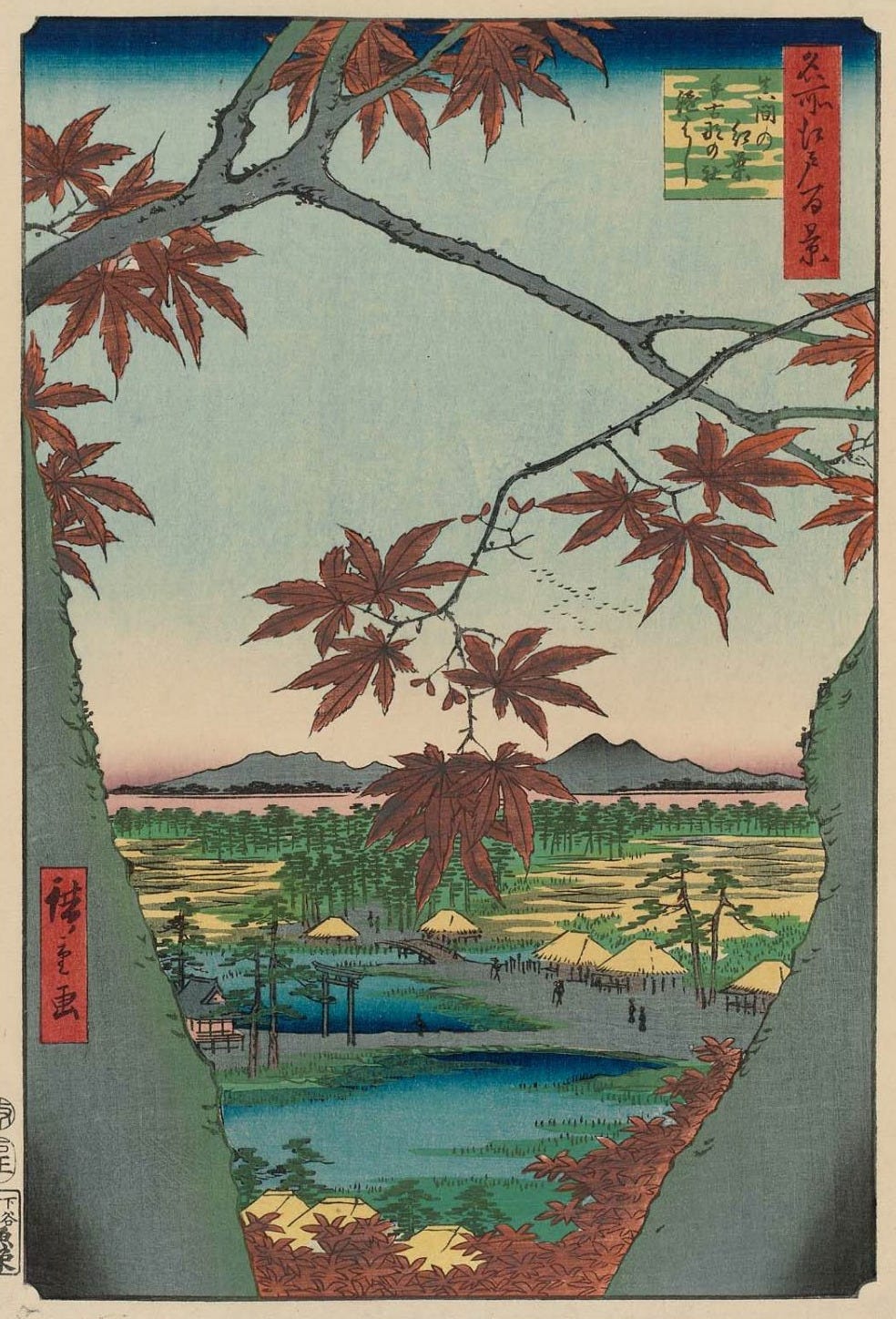
Hiroshige’s print below may be one of the most well-known Japanese prints depicting autumn leaves, and it’s certainly one of my favourites.
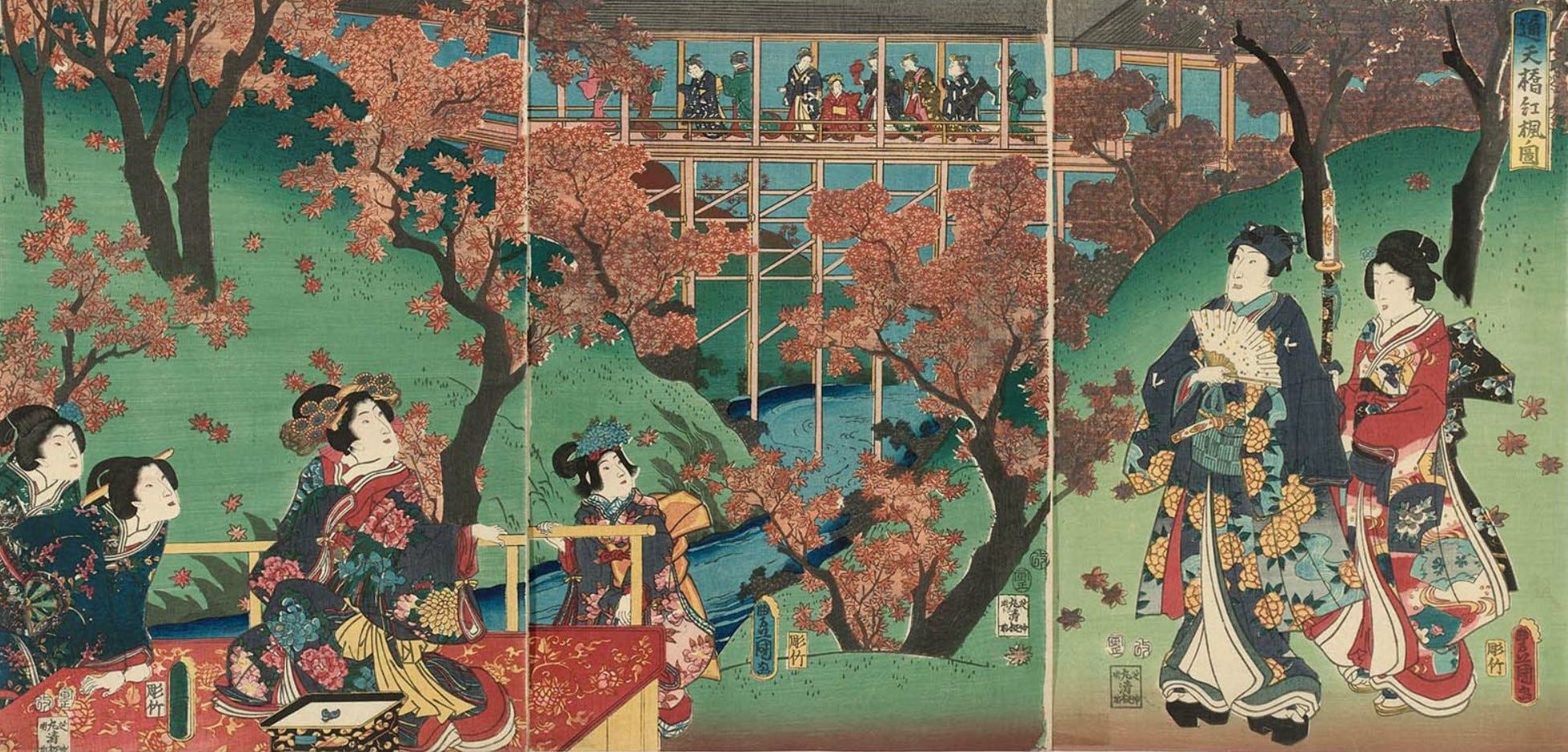
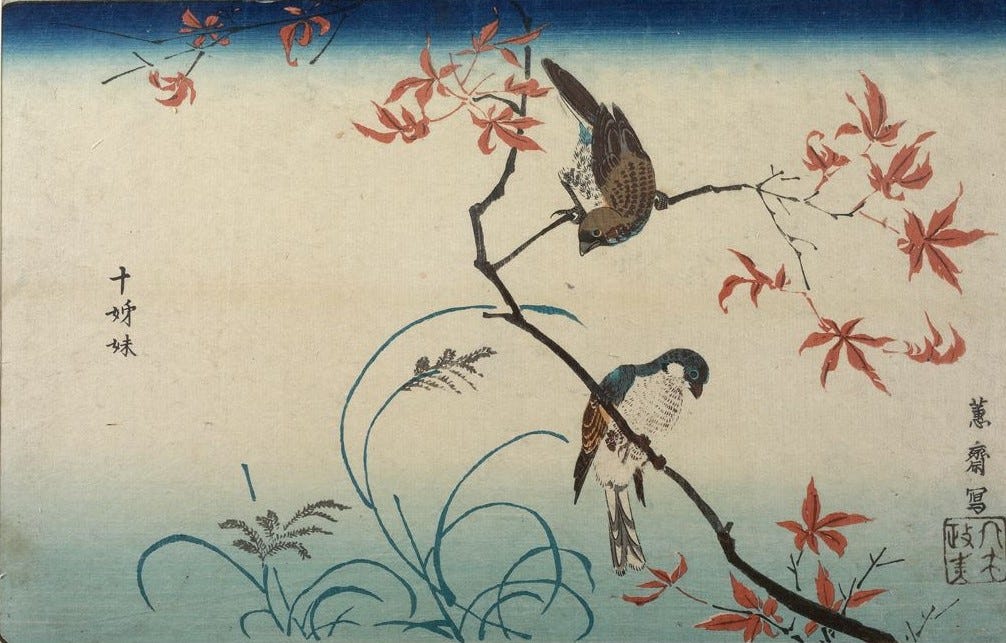
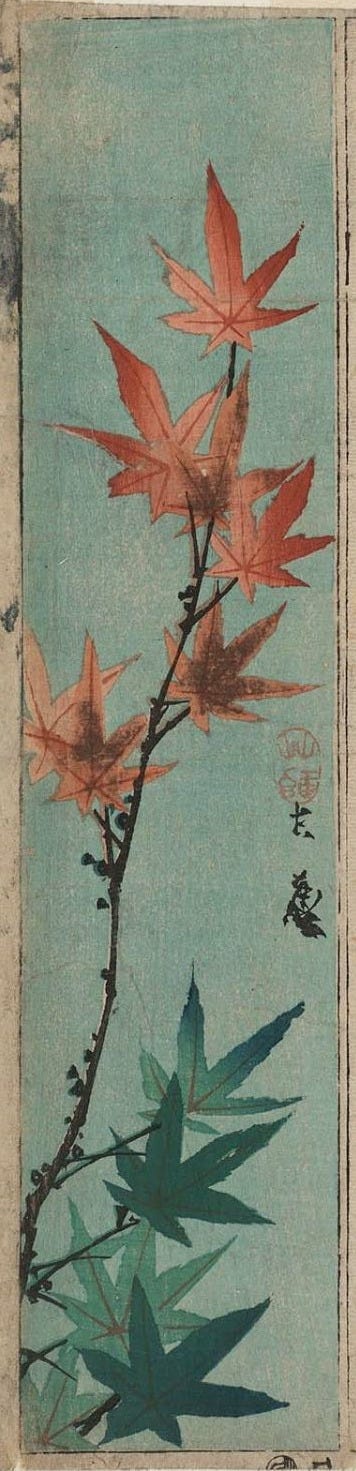
There were so many examples that I found it hard to choose which ones to include. Some depict autumn landscapes, others show birds alongside autumn leaves, and others show people engaged in momijigari. Here is a small gallery of examples.


Autumn poetry
There are so many Japanese poems inspired by autumn, but as this article is already so long, I will just include a very small selection. The famous haiku poet Matsuo Basho was often inspired by the seasons so here are three of his autumn poems. For each one I have also included a ukiyo-e print.
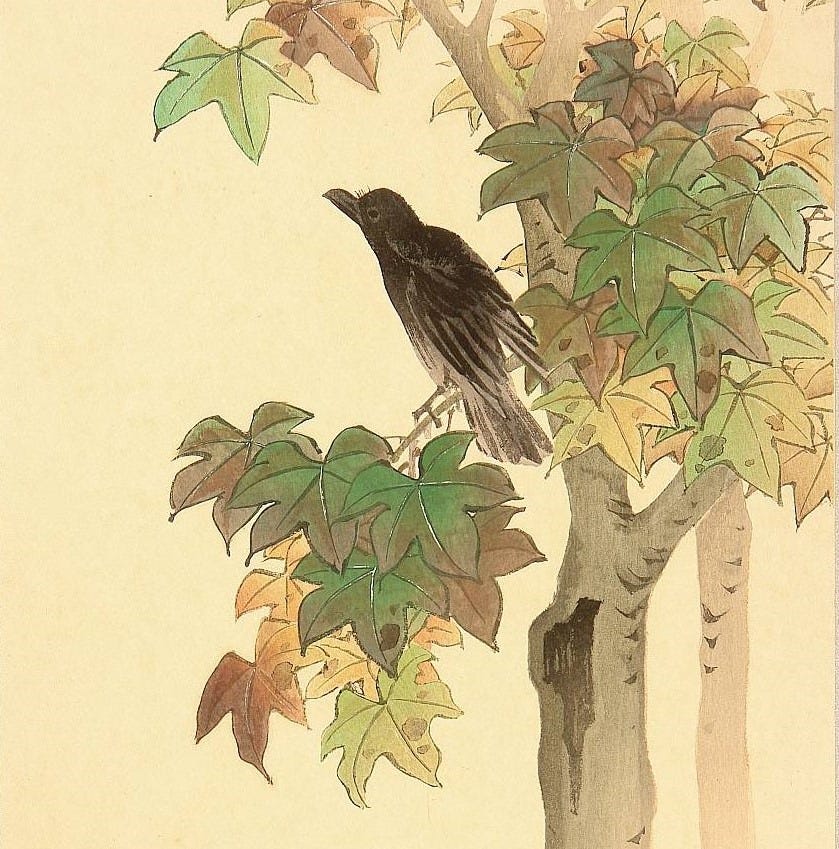
On a withered branch
a crow has settled—
autumn evening.
In the autumn night,
Breaking into
A pleasant chat.
In this autumntime,
why do I so feel the years?
In the clouds a bird
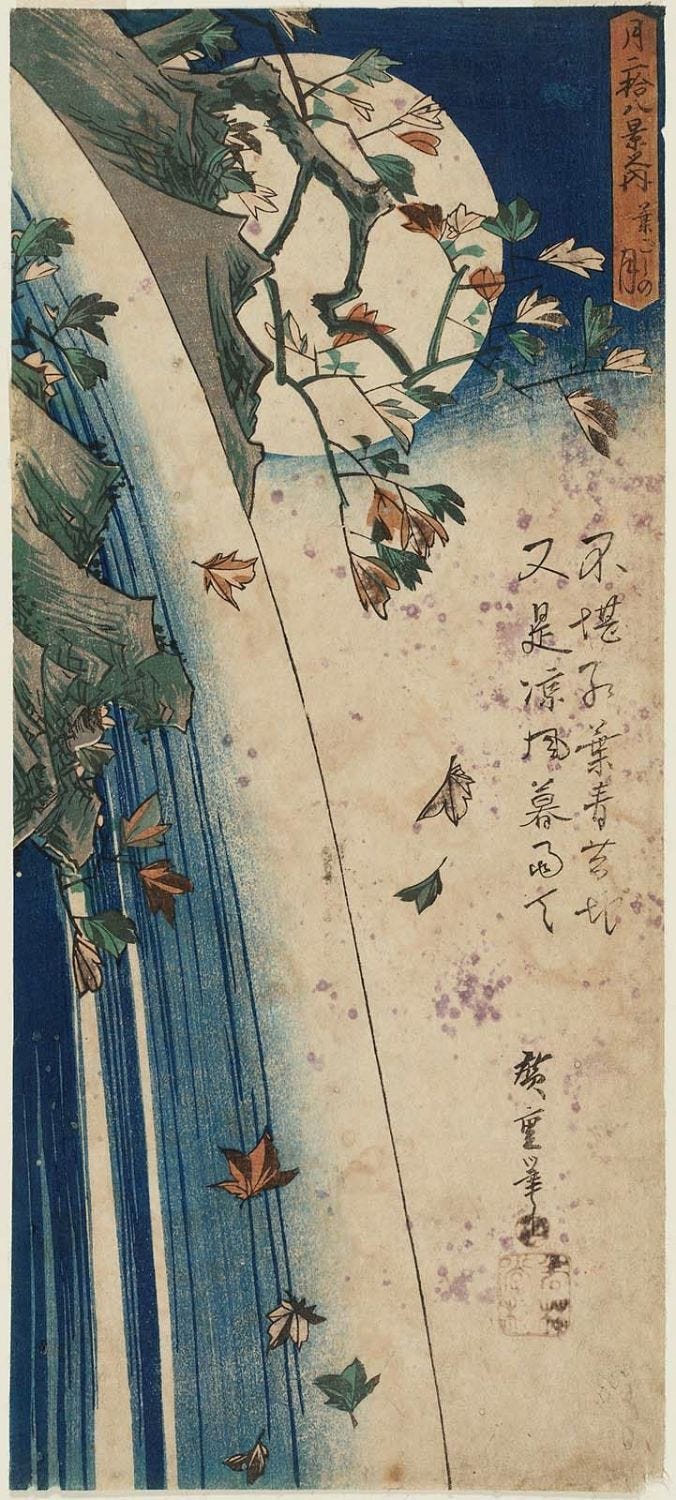
Sometimes poetry can also be the inspiration for art. The poem below inspired Utagawa Hiroshige to create an 1832 ukiyoe print titled ‘Moon Seen Through Leaves’ as part of a series ‘Twenty-eight Views of the Moon’ from which only two prints are known. This poem was originally published in an anthology of Chinese and Japanese poems for recitation compiled in the 11th century by the courtier Fujiwara Kinto, and has been translated by Yoko Woodson.
It is not unbearable to see maple leaves fall,
Scattering on the mass-covered ground.
It is unbearable to feel the wind grow chilly,
And see the whole sky darkening.
Thank you so much for reading and enjoying momijigari with me. Once again I’m sorry that this article has been published a little bit later than I had hoped. I thank you all for your patience and support and I hope you enjoyed this little taste of Autumn in Japan. This newsletter is completely free but if you would like to support my work, donations will be most gratefully received via Ko-fi.
At the link below you can watch a part of the 1899 film version of Momijigari.
I am back after doing momijigari in Japan and this article feels like my thoughts and photos gathered in one place! So thankful you did this
Again- incredible art to complement all the literary imagery!! 💥