
Water Spirits in Japanese Folklore
Tales of nushi in ponds, lakes and rivers

In Japanese folklore, many rivers and ponds are believed to be inhabited by nushi. In Japanese the word nushi (主) means the master of a particular place. While a nushi can refer to the head of a household, or even a whole area, the word is also used for guardian spirits or kami associated with landscape features. In some cases nushi that inhabit bodies of water are also known as suijin or mizugami (水神, water gods). These spirits are often revered as kami (or gods) by local inhabitants, and they can be both benevolent and dangerous. Nushi can take a variety of forms including dragons, fish, snakes, turtles, spiders, or eels, and sometimes they are gigantic in size. There are stories of these water spirits interacting positively with humans, such as bringing rain for crops, but there are also tales of negative interactions. A common theme in nushi tales is that if the nushi believes it, or the area it inhabits, is not being respected then they will become vengeful by causing floods, droughts, or earthquakes, eating fishermen who get too close to their homes, playing pranks on locals, and sometimes even demanding human sacrifices or taking young girls as wives. These creatures also commonly have shapeshifting abilities, often appearing as humans.
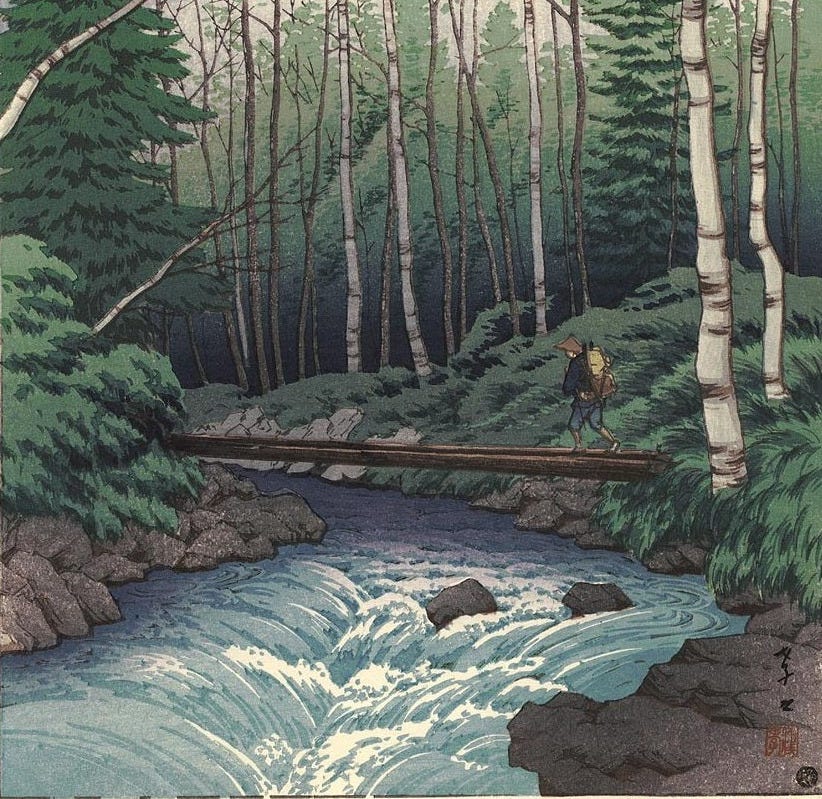
Entire books could be written about nushi and water kami in Japanese folklore but in this article I will just share a small selection of folktales involving nushi and a few yokai associated with spirits of ponds, lakes and rivers. As always, I will include a collection Japanese woodblock prints that I hope you enjoy.
Folktales about Nushi
The Man who Became a Dragon
This tale is about a man named Botaro, who was the son of farmers. Instead of helping on the farm, each day he chose to go fishing alone at a nearby pond, which everyone thought was very strange behaviour. One day, he did not return home and his parents were very distressed. They searched high and low for him and began to fear that he had drowned. They mourned his death, but to their great surprise, he returned home one day as if nothing had happened.
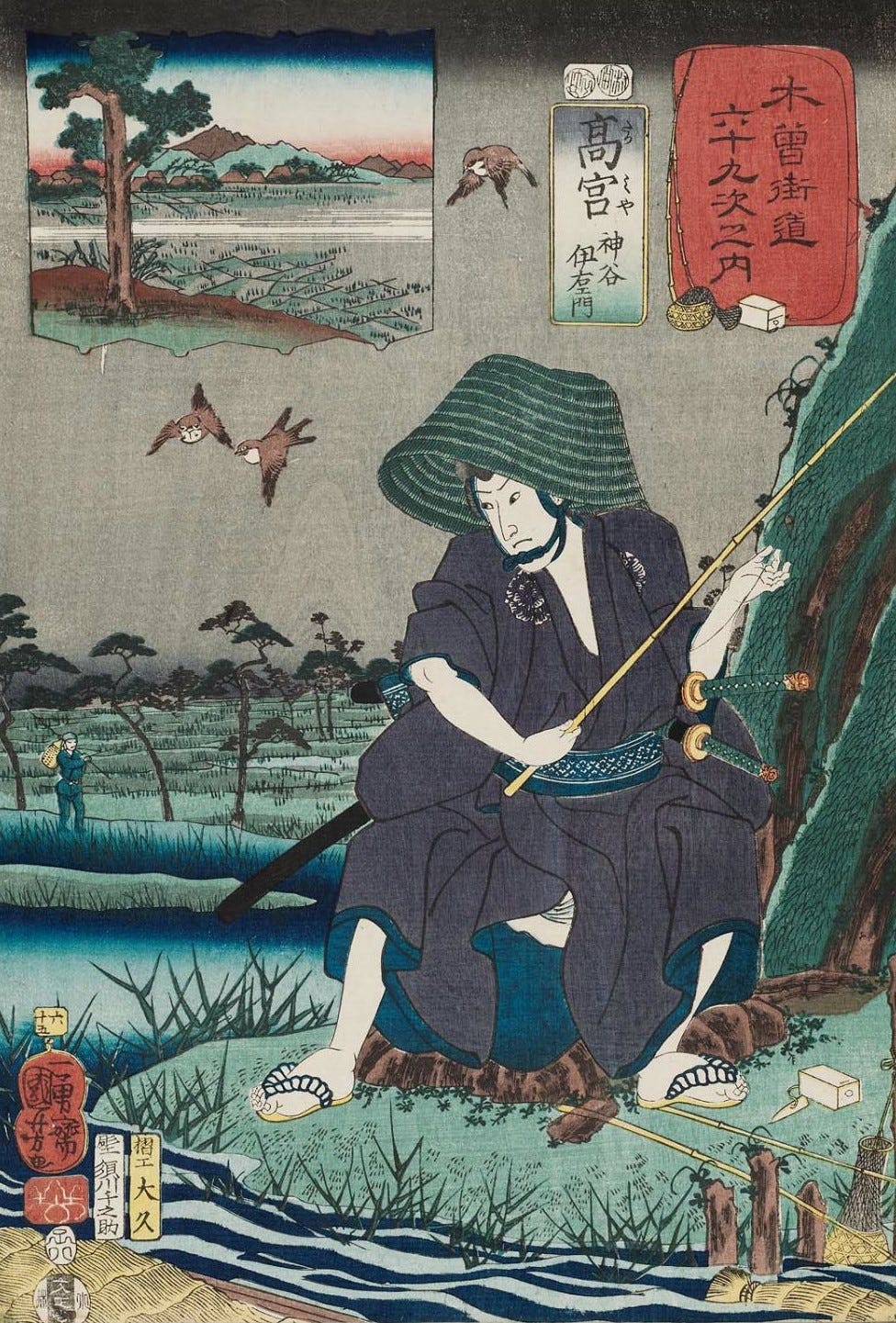
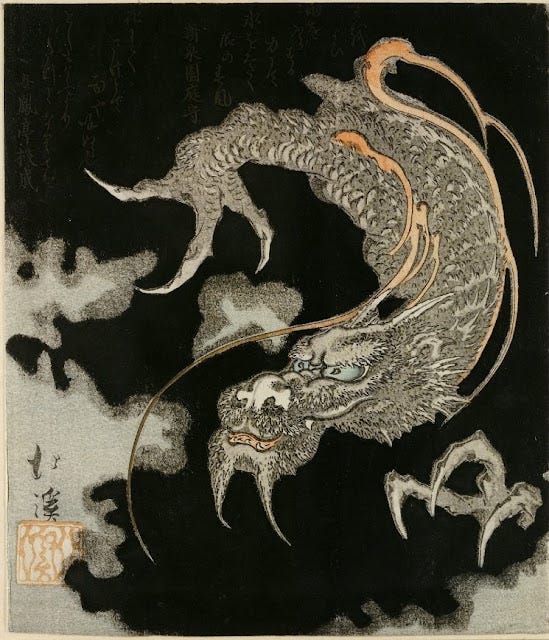
Despite his parents worry, Botaro continued to go fishing at the pond each day. After returning home from fishing one day he was very tired and headed to his room for a sleep, telling his parents not to look in on him. Thinking this was a very strange request, they crept outside and peered in through his window. On the floor they saw a dragon lying asleep on the floor. The room began to fill with water and the dragon woke suddenly. Upon seeing them, a huge wind carried the dragon up into the sky. At this point everyone realised that Botaro had spent so long fishing at the pond that he had transformed into the nushi of the pond. Afterwards, no one ever fished or swam there again.
The Catfish Nushi of Asuwa River
There was a pond near the Asuwa River that was said to be home to a terrifying catfish nushi. Because of this no-one ever fished there for fear of being cursed. One day the lord of the province was travelling with many samurai. He arrived at the pond and saw it was clear and full of fish. He ordered the samurai to catch some fish for him. They all stood in silence until one of the samurai explained to him about the nushi. He was outraged that they would be more fearful of the catfish than him, and he demanded they catch the fish regardless.
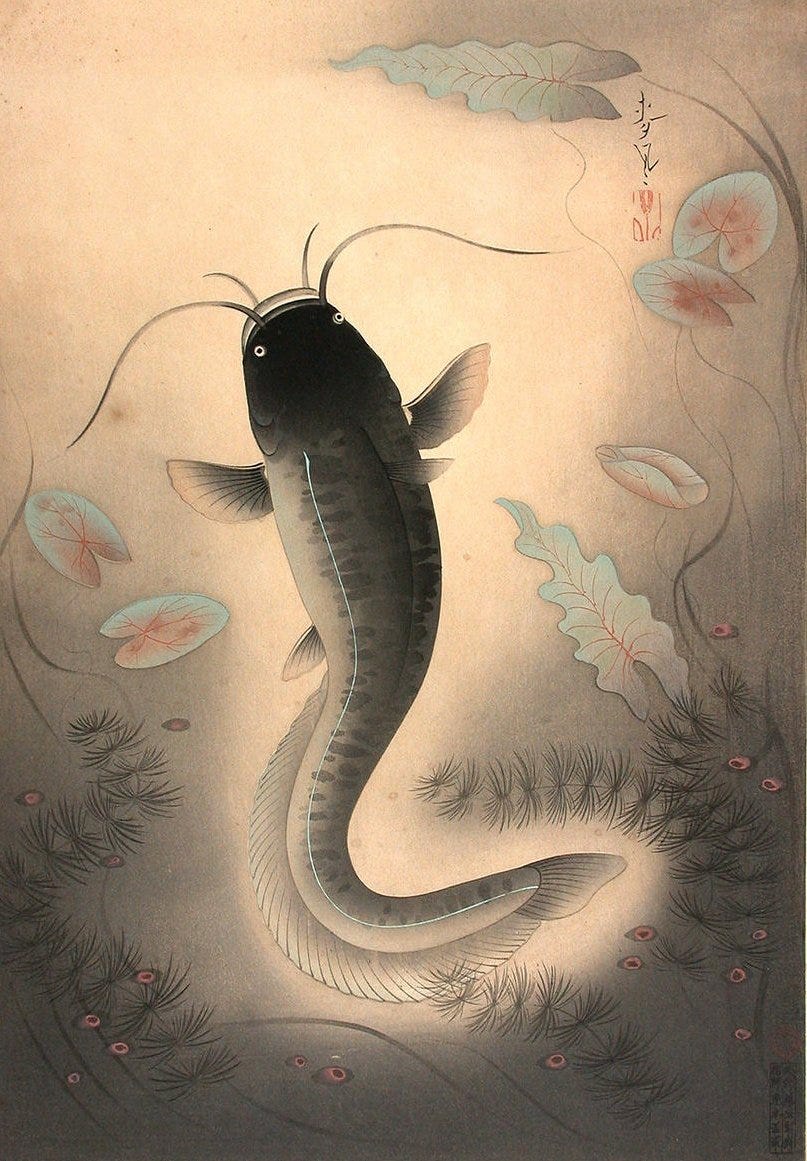
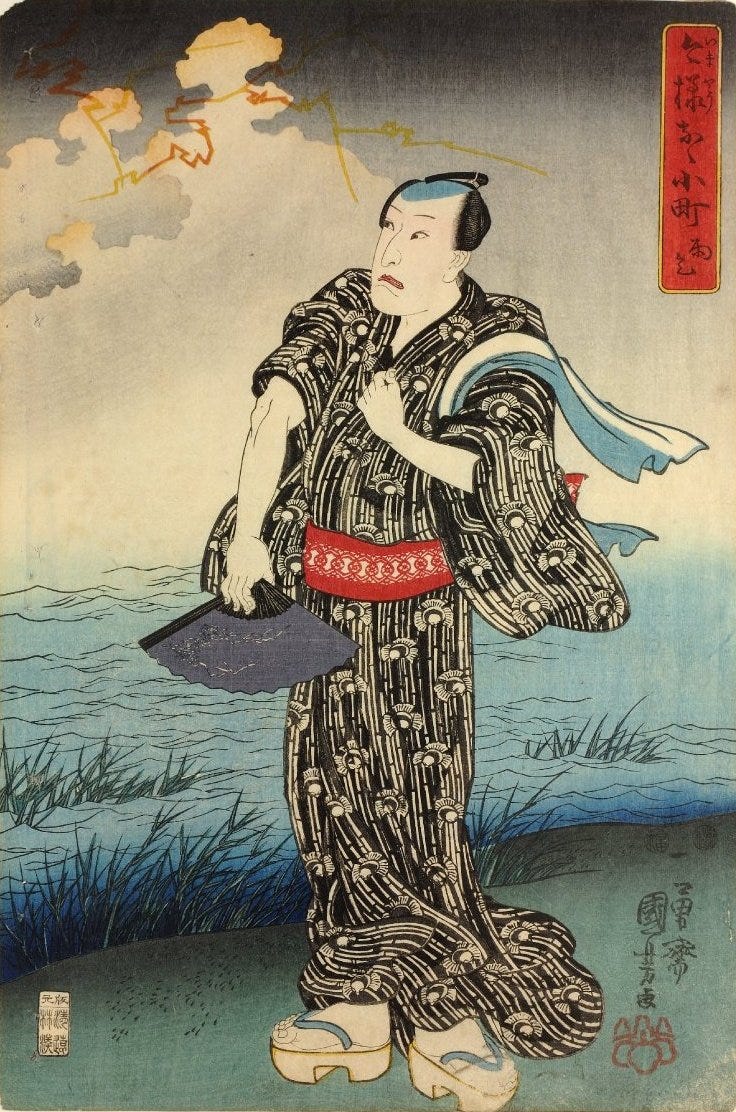
With horror they threw their spears at the pond. The sky grew dark, thunder crashed and lightning filled the sky. An enormous catfish breathing fire emerged from the pond to attack the lord. He and the samurai began running as fast as they could. Meanwhile, noticing a change in the weather, a Buddhist priest came outside to see what was happening. He saw the catfish about to swallow the lord in one mouthful. Quickly, he pulled off his robe and ran to throw it over the man. At this point the catfish vanished and the terrified lord bowed before the priest to thank him for saving his life. Thereafter the priest’s robe was known as the ‘Demon-quelling Robe’ and it is apparently still celebrated at the temple today.
The Legend of Joren Falls
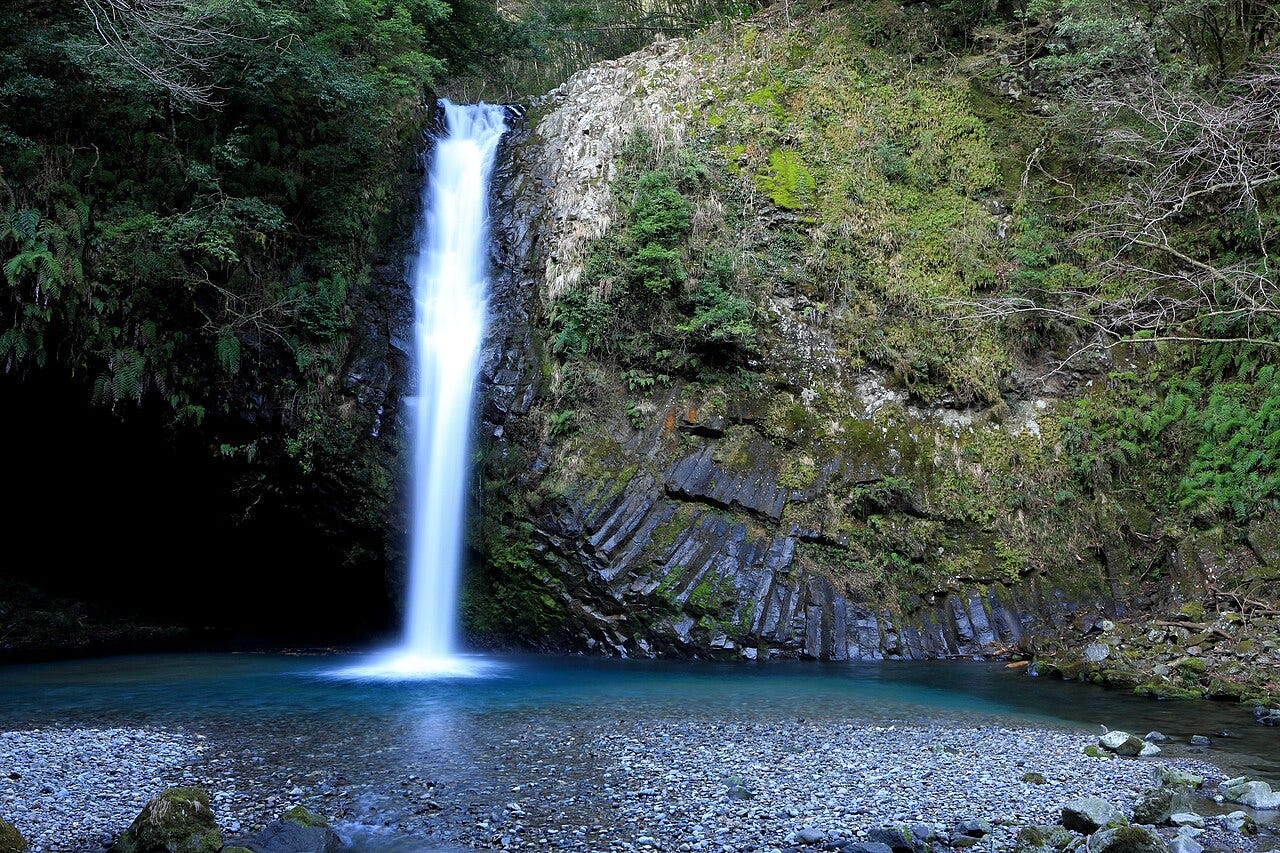
Joren Falls on the Izu Peninsula has a drop of 250 meters into a deep dark blue pool at the base, and apparently many visitors report feeling uneasy when viewing it. There is a tale about the nushi who is said to inhabit the pool. The story goes that there was once a local farmer named Kanbe who worked in the fields nearby. One day he sat beneath a mulberry tree to rest and watched with interest as a silk spider wove a web between his big toe and the pool at the base of the falls. Not wanting to destroy the spider’s hard work, when he got up to resume work, Kanbe gently took the web from his toe and attached it to the mulberry tree. Just then, the sky grew dark and the waterfall seemed to roar even louder before the mulberry tree was torn from the earth and pulled into the pond.


Feeling very lucky at his narrow escape, Kanbe ran home to the village and told everyone what had happened. After that, no one in the town ever approached the waterfall again for fear of becoming victim to the spider who was obviously the nushi of the pond. Many years later, a travelling woodcutter accidentally dropped his axe into the pond. He was a good swimmer so he decided to dive straight into the freezing water and retrieve his axe. When he surfaced he saw a beautiful, almost transparent woman standing near the rocks at the base of the falls with his axe in her hand. She informed him that she was a silk spider and nushi of the pond, and that she would return his axe on the condition he told no one about her, saying that if he did, his life would end.
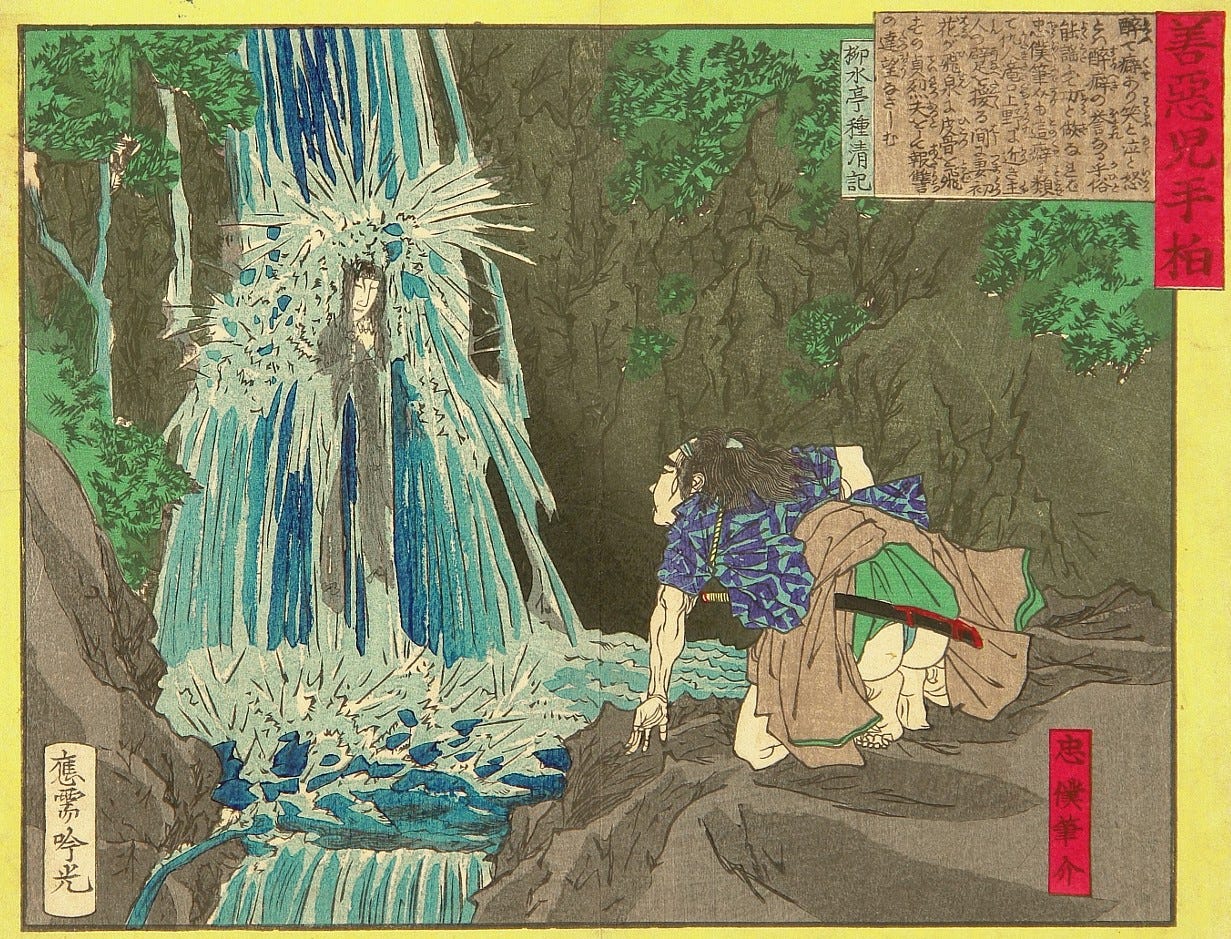
Feeling terrified and lucky to have escaped, he went to the village. He asked around and heard the rumours about the spider nushi. Later, after consuming enough sake to make him very drunk, he let his ego get the better of him and began boasting about his meeting with the silk spider and how he had come away unscathed. That night he died in his sleep and the villagers knew for sure the nushi was responsible. They continued to keep well away from the waterfall. The photograph below is of the real Joren Falls on the Izu Peninsula in Shizuoka Prefecture.
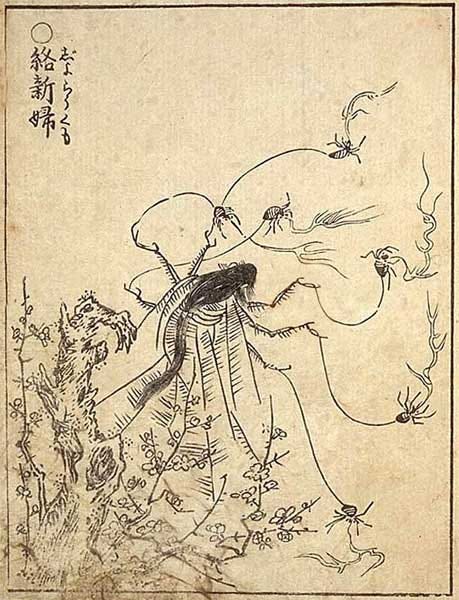
The spider nushi is this tale was a yokai known as jorogumo, a giant spider yokai. It is believed that when a regular golden orb spider reaches 400 years of age it can develop supernatural powers including the ability to shapeshift. At this time it also chooses to eat humans instead of its regular diet of insects. In order to obtain humans to eat, jorogumo will often take the form of beautiful women in order to seduce unsuspecting male victims.
My Lord Bag of Rice
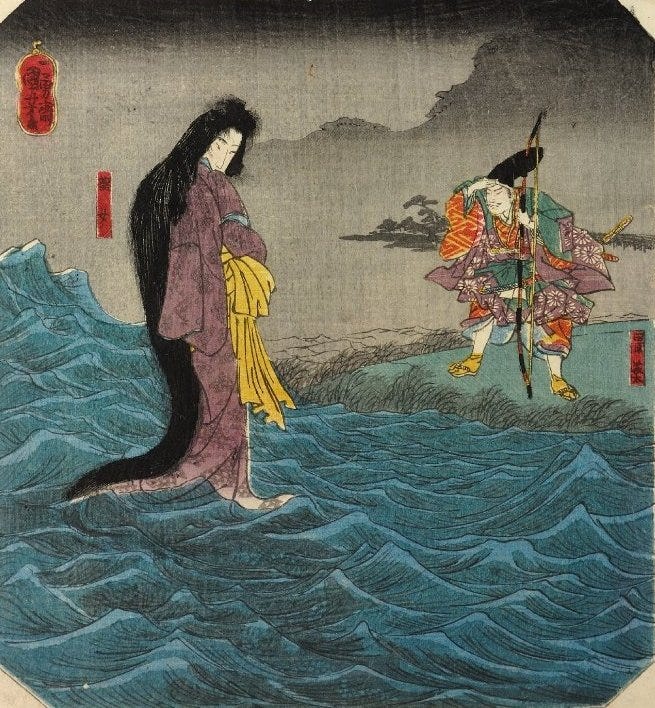
There is another famous Japanese folktale known as Towara Toda Monogatari, or My Lord Bag of Rice. It is about a hero who encounters the dragon spirit of a lake in the form of a beautiful princess. In this tale she asks for his help to defeat a monstrous centipede that has been terrorising her family who live in a dragon palace deep under the lake. If you would like to read the full tale, I have written about it here.
Yokai
There are many yokai that are nushi of ponds, lakes and rivers throughout Japan. Possibly the most well-known is the kappa, which I wrote about in my previous article about turtles, so I won’t go into kappa lore again this time. I’ve included below a few other yokai instead that you might encounter around bodies of water in Japan.
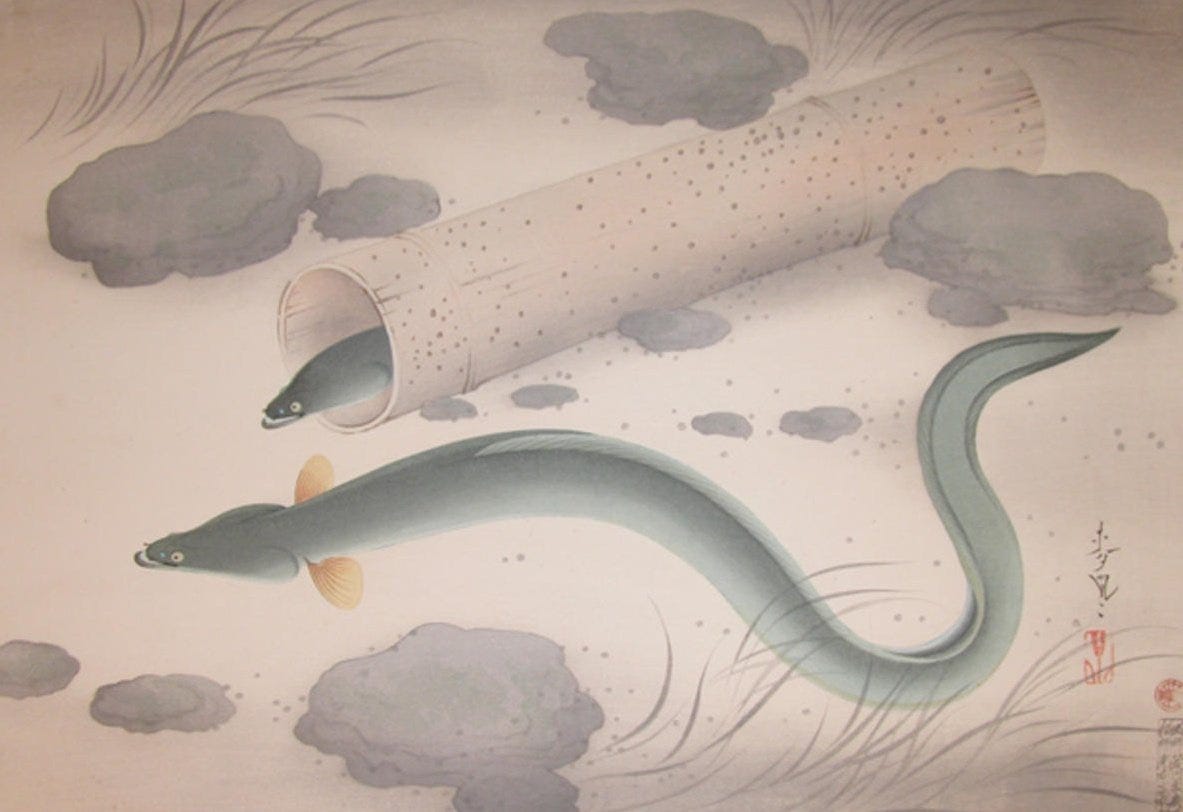
Unagi Hime
Unagi hime, which translates as eel princess, is a huge shapeshifting eel that takes the form of a beautiful woman. This yokai is believed to live at the bottom of deep ponds and lakes and acts as a guardian of both the lake and everything in it. In Miyagi Prefecture it was believed that eels took the role of guardian in any ponds they inhabited, often battling other guardian animals such as crabs or spiders.
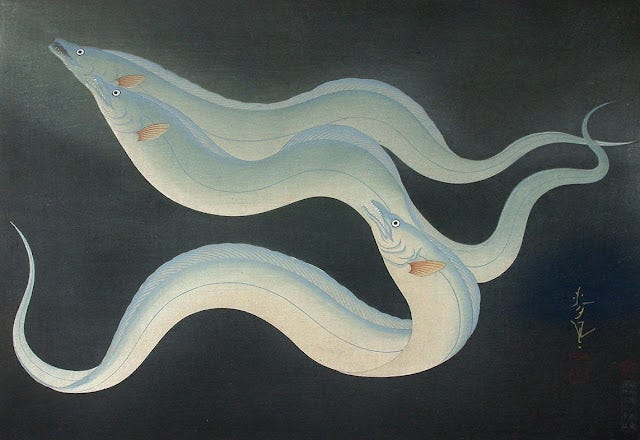
Little else is known about this mysterious yokai other than that in some reports she is said to weave cloth on an underwater loom. The clacking noise of the loom can be heard on the banks of ponds indicating that unagi hime is lurking beneath the water. She will likely remain hidden in the depths unless challenged. To pay your respects to this water guardian you should keep your distance, and refrain from catching eels if you are fishing in her lake. In fact to do otherwise would likely make other fishermen very angry with you.
Amemasu
The amemasu is a giant fish-like creature found in the rivers and streams of northern Japan. They can grow so big as to fill an entire lake. When thrashing around they can capsize boats, create earthquakes, and cause other natural disasters. Amemasu can shapeshift and take the form of a beautiful woman in order to lure young men to their deaths. In their human form, they can be identified by the fact that their skin will feel cold and clammy, just like that of a fish.
Iwana Bozu
Iwana bozu are char (a type of river fish) who grow to an enormous size and transform into yokai. They are able to shapeshift into human form, dress in Buddhist priest’s robes, walk and talk. Mostly they approach people who are fishing in rivers to ask them to stop. They also talk to them about avoiding needless killing and taking only what they need. They warn people against fishing methods that cause damage such as river poisoning using Japanese pepper. Most people think they are priests and don’t consider the possibility of them being yokai until after they have left.


Ponds, Lakes and Rivers in Japanese Art
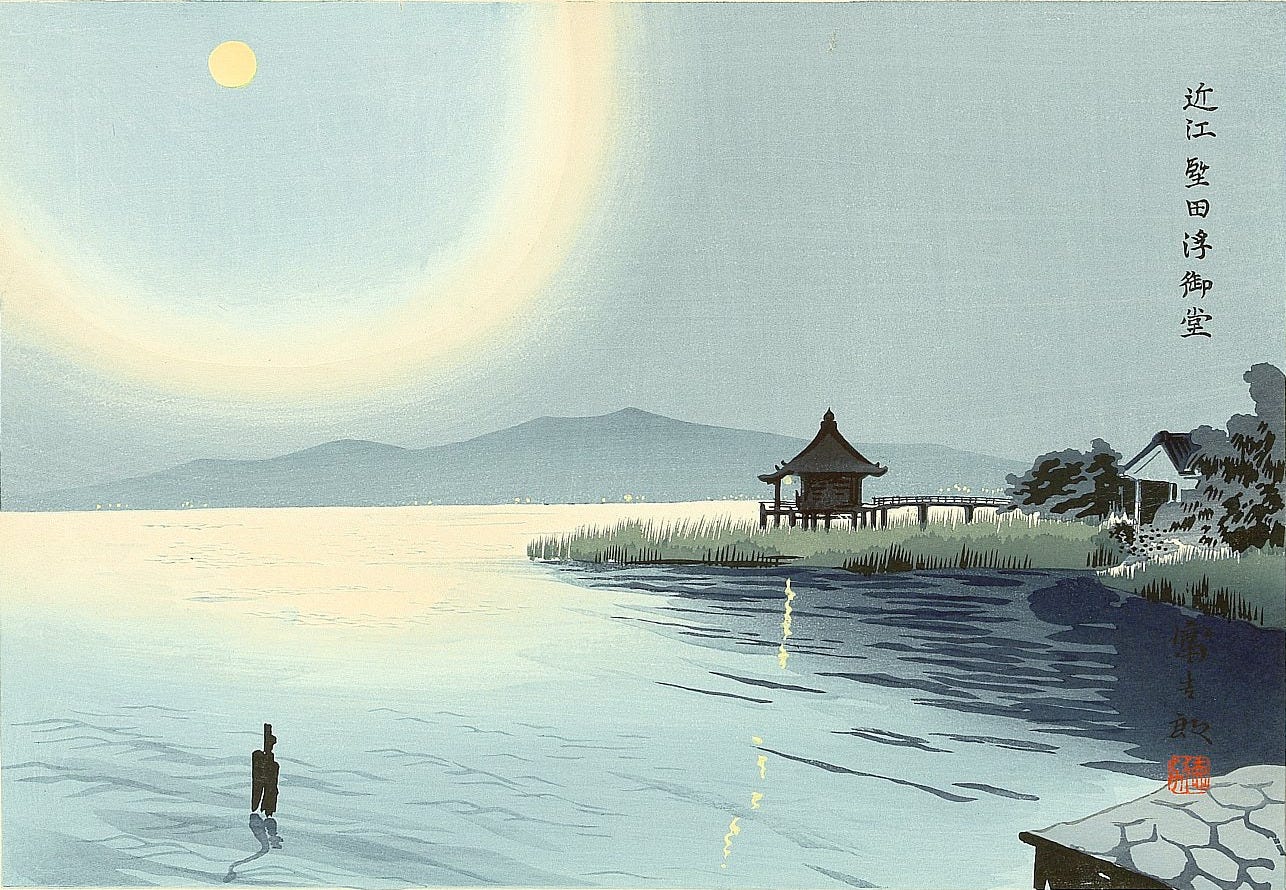
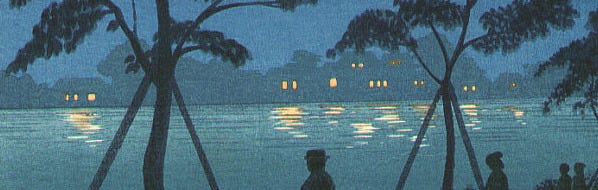
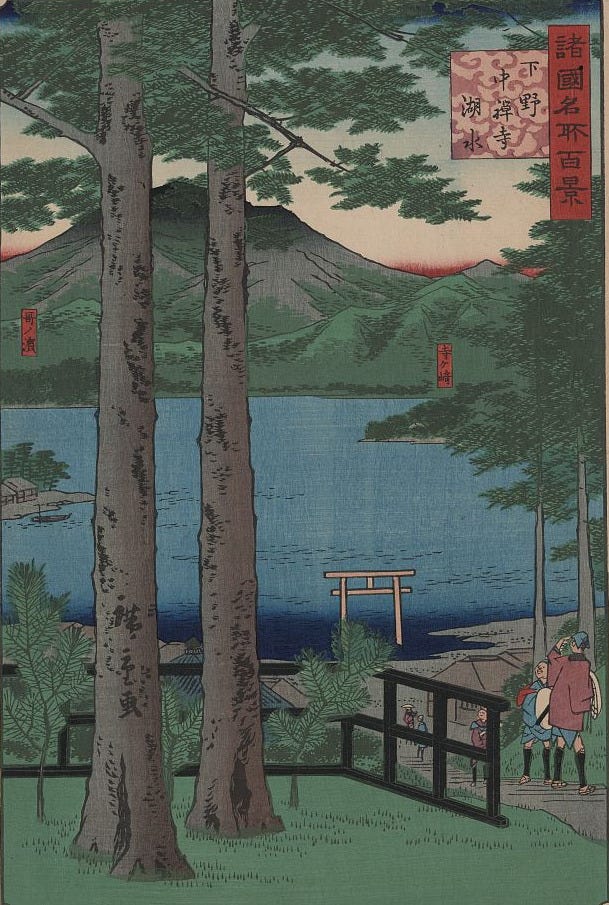
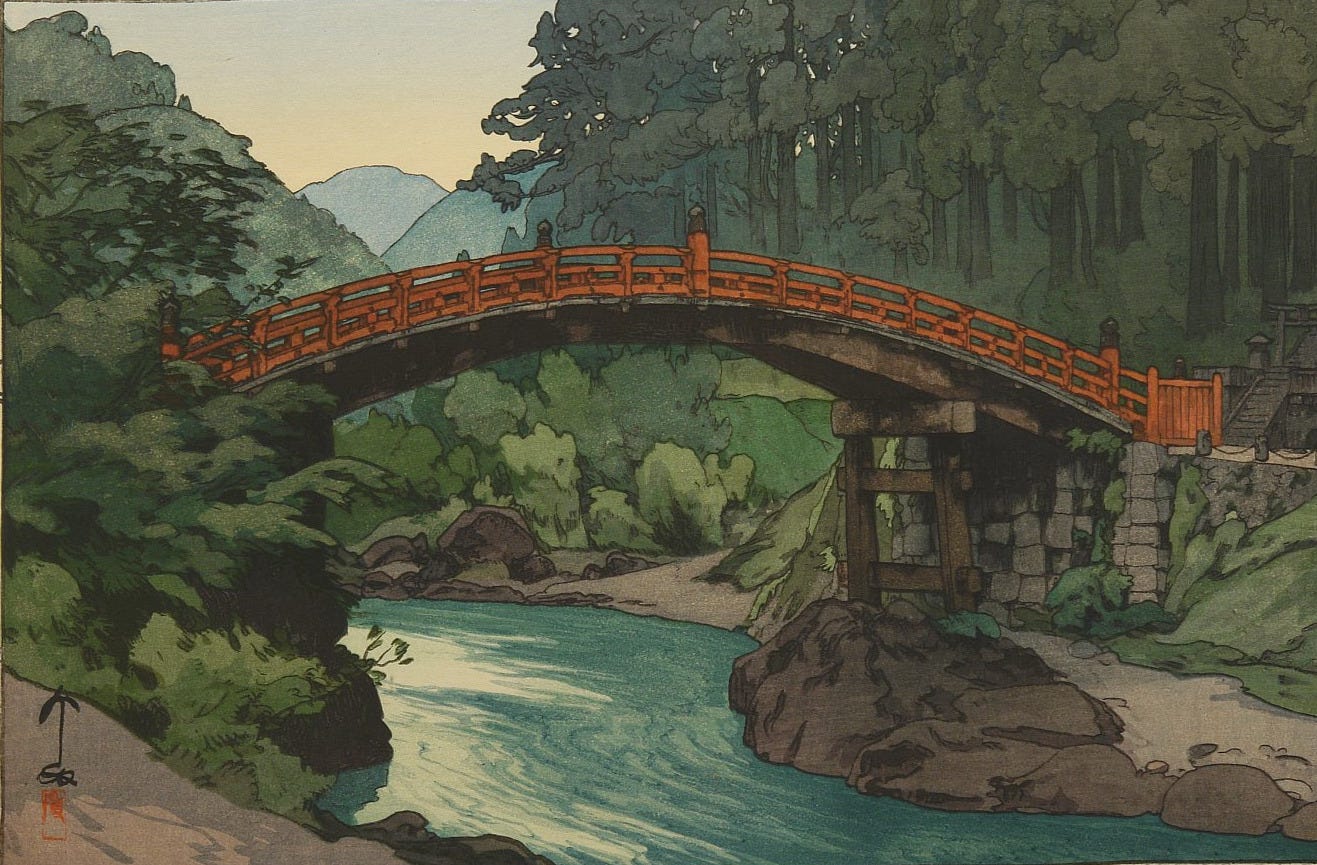
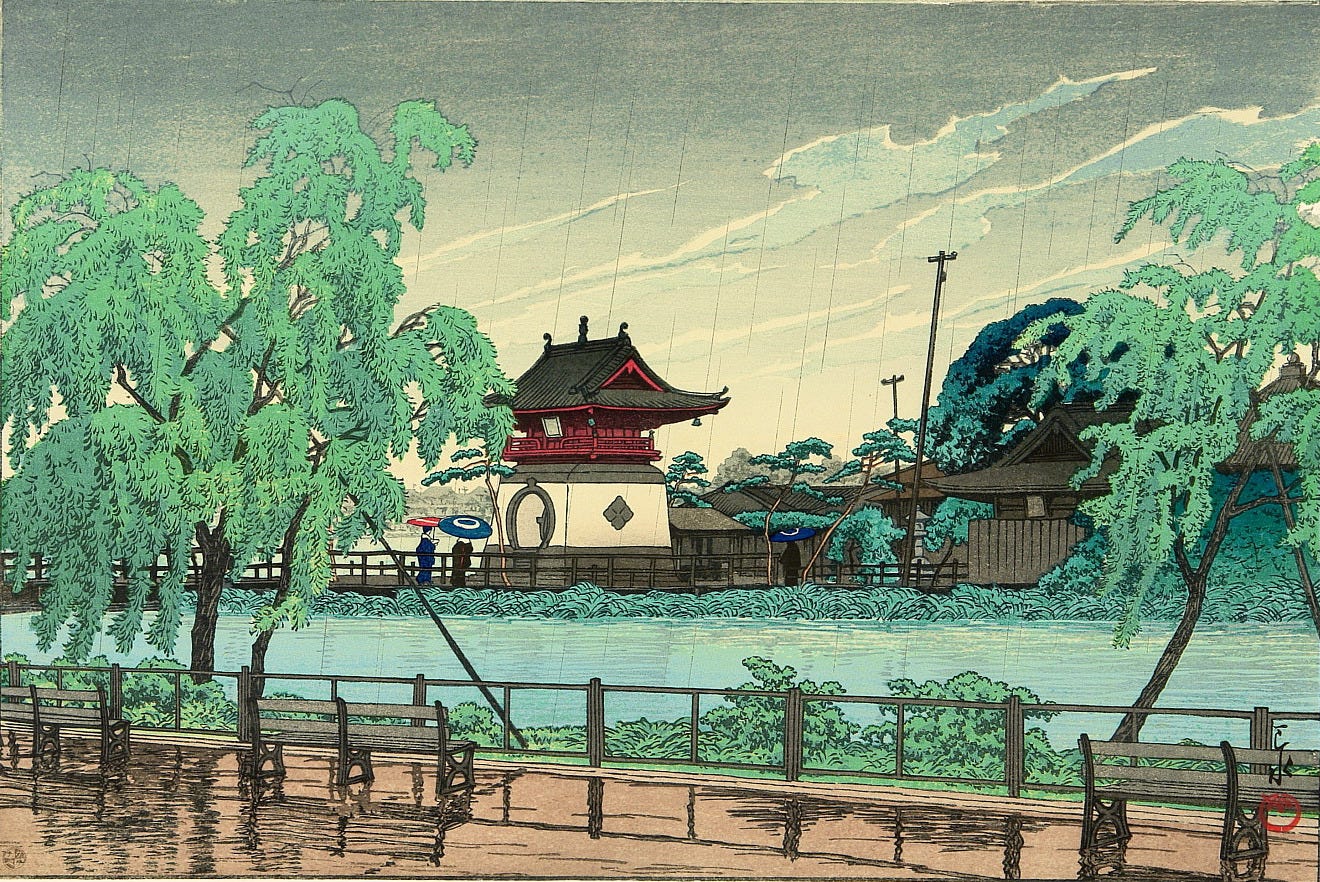
As mentioned previously, people living near lakes and rivers often respect the nushi of those water bodies and treat them as kami. In some cases shrines, both formal and informal, are built beside them. In the print below you can see a torii (gate) beside the lake.
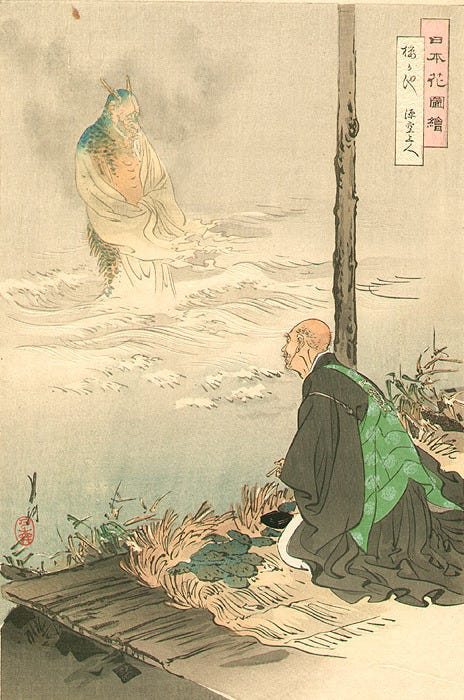
In this print by Ogata Gekko you can see a spirit that appears to be rising out of the water.
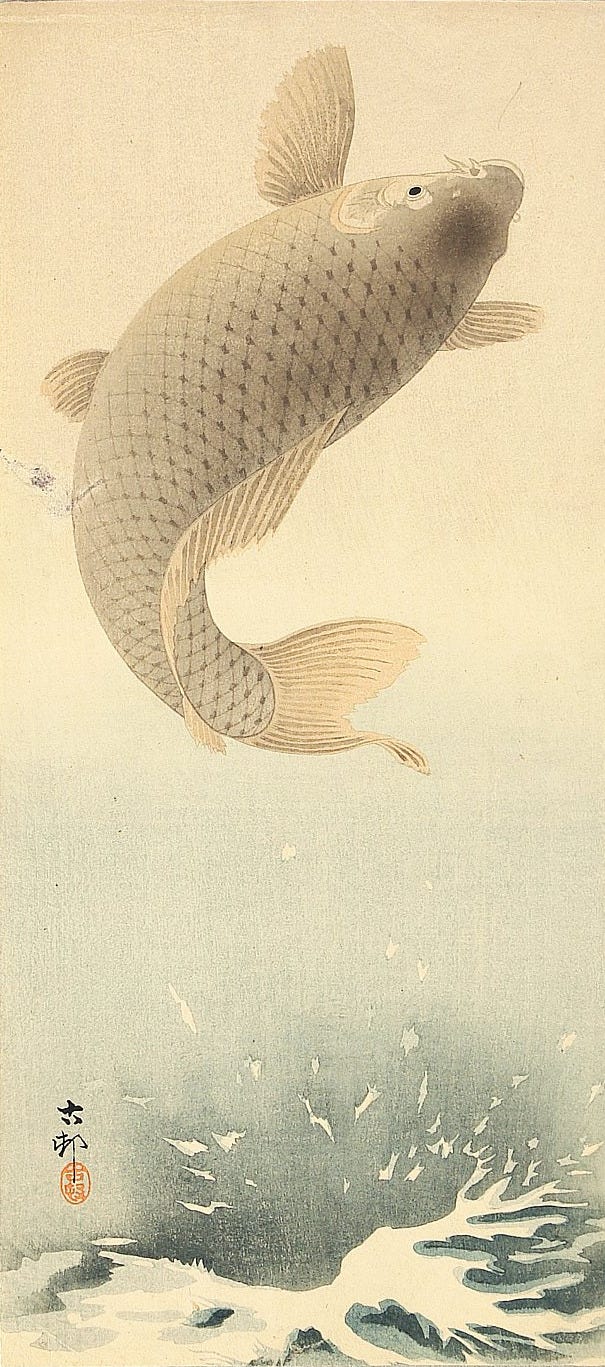
Nushi take many forms, including fish, which are a popular subject of woodblock prints. Here are three of my favourites.


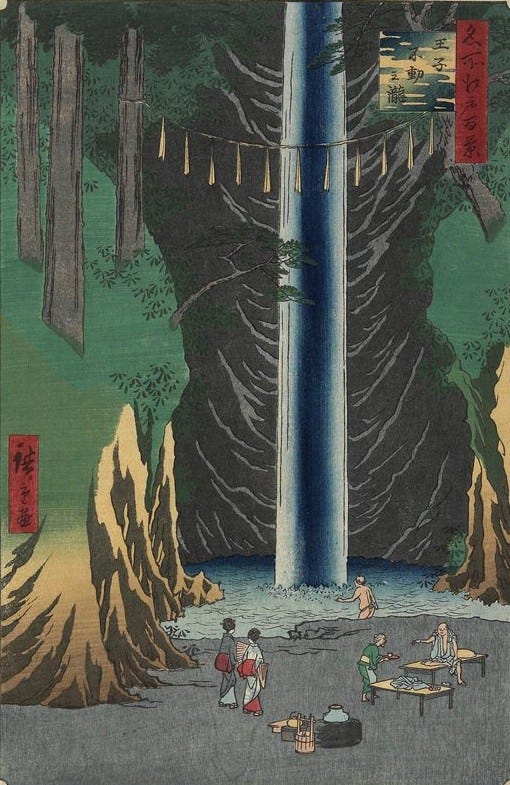
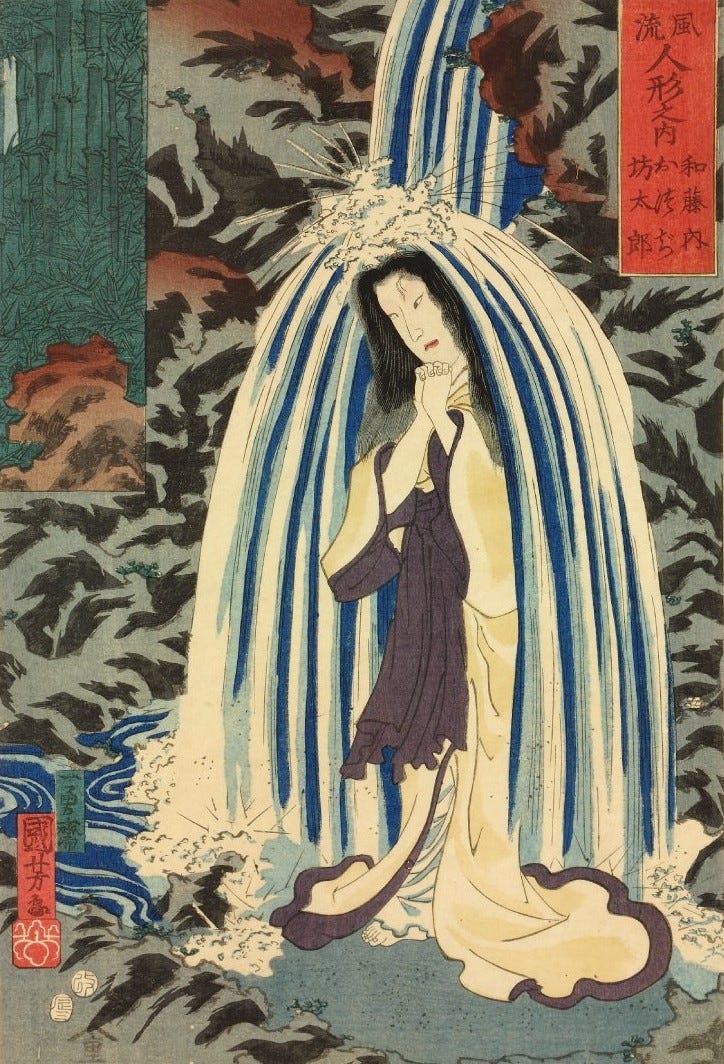
Waterfalls are important in many Japanese spiritual practices, particularly Shugendo, where practitioners stand beneath them as part of a purification ritual. Given the beauty and power of waterfalls, it's no wonder that they came to be see as home to nushi and even viewed as kami themselves. In the first print below, you can see a shimenawa (rope) tied across the top of the waterfall which is used to mark a sacred space.


There are many more tales about nushi and water yokai that I have not had room to include in this article, but I hope you have enjoyed reading this small collection of watery tales and yokai. This newsletter is completely free but if you would like to support my work, donations will be most gratefully received via Ko-fi.
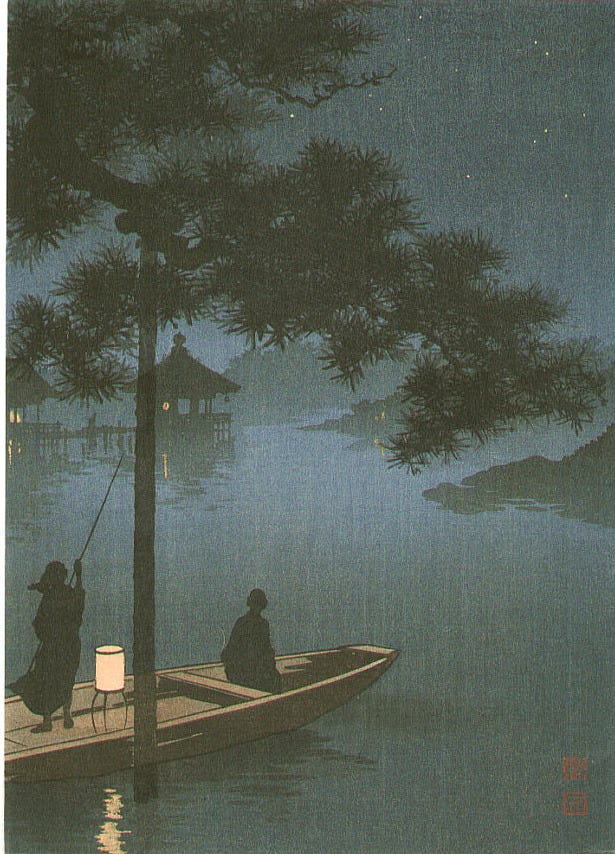
Thanks for the stories and art! I was extremely excited to see the Lake Biwa by Tokuriki Tomikichiro. My Grandfather had brought home 10 prints from Japan, so I grew up seeing these prints but never knew the artist.
Welcome back :)
Thanks for sharing more myths and stories. Great stuff, as usual!