
While You Were Sleeping
The yokai of your dreams and nightmares

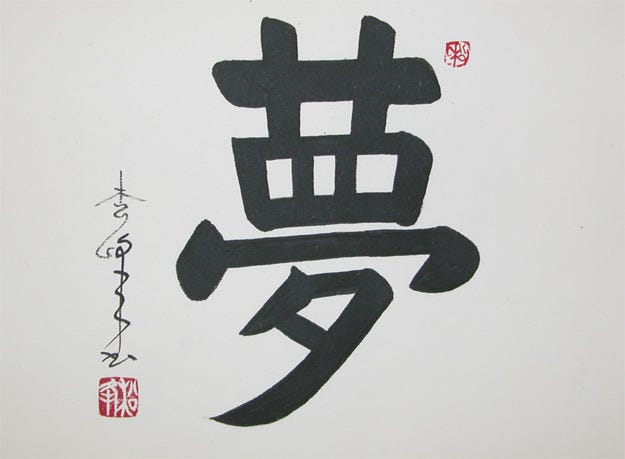
In Japan, there was traditionally a belief that during sleep the soul could leave the body and interact with the spirit world. In the Kojiki, Japan’s oldest surviving chronicle, dreams (夢, yume) were said to be a way that rulers could receive divine messages from the gods. This belief is found throughout Japanese folklore and even today it is said that the first dream of the new year, known as hatsuyume, has special significance for the year ahead. Given that dreams were seen as portals to the spirit world, it is probably unsurprising that they were also connected to other, less helpful kinds of spirits.
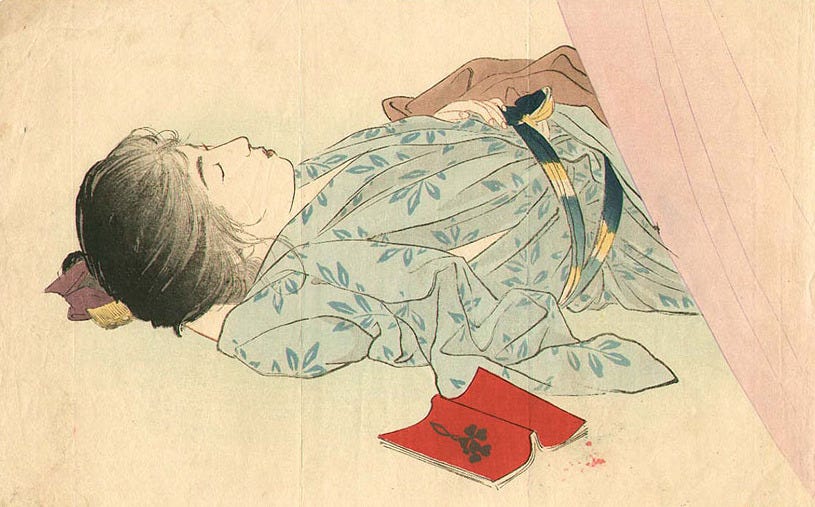
Supernatural creatures known as yokai are said to exist in a parallel world to our own and at certain times, these sometimes terrifying entities may cross the boundary into our world. One of these times is at twilight, traditionally known in Japan as omagatoki (大禍時) which translates as ‘the hour of meeting evil spirits.’ In the past people ensured they were home safely before dark in order to avoid any encounters with sinister otherworldly beings. However, that wasn’t always enough to ensure you were safe. The darkest time of night is known as The Hour of the Ox (ushi no koku) and falls between 1 and 3 am. Based on the Chinese zodiac, each of the twelve animals rules a two-hour period of the day and in folklore the Hour of the Ox was often the time of ghostly happenings. By this time of night most people are sound asleep, but for some yokai that is exactly the time they like to visit.
Yume no Seirei
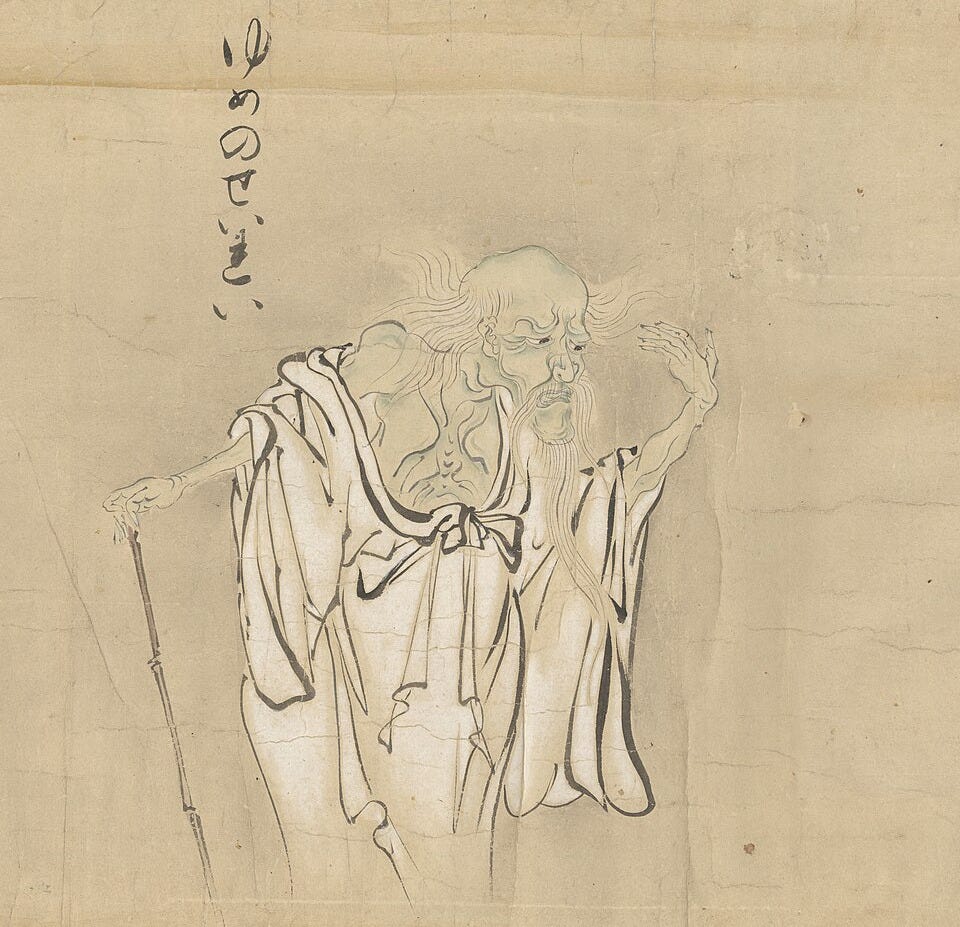
Yume no Seirei was said to be the yokai responsible for our nightmares and was portrayed as a withered, elderly man in white robes with similar features to typical depictions of yurei (Japanese ghosts). He was often shown with a walking stick and his hand up beckoning. Not much is known about this yokai other than his depiction on Edo period hand scrolls as part of the Hyakki Yagyo, or demon night parade. The example below is from a picture scroll dating to around 1700.
Kanashibari
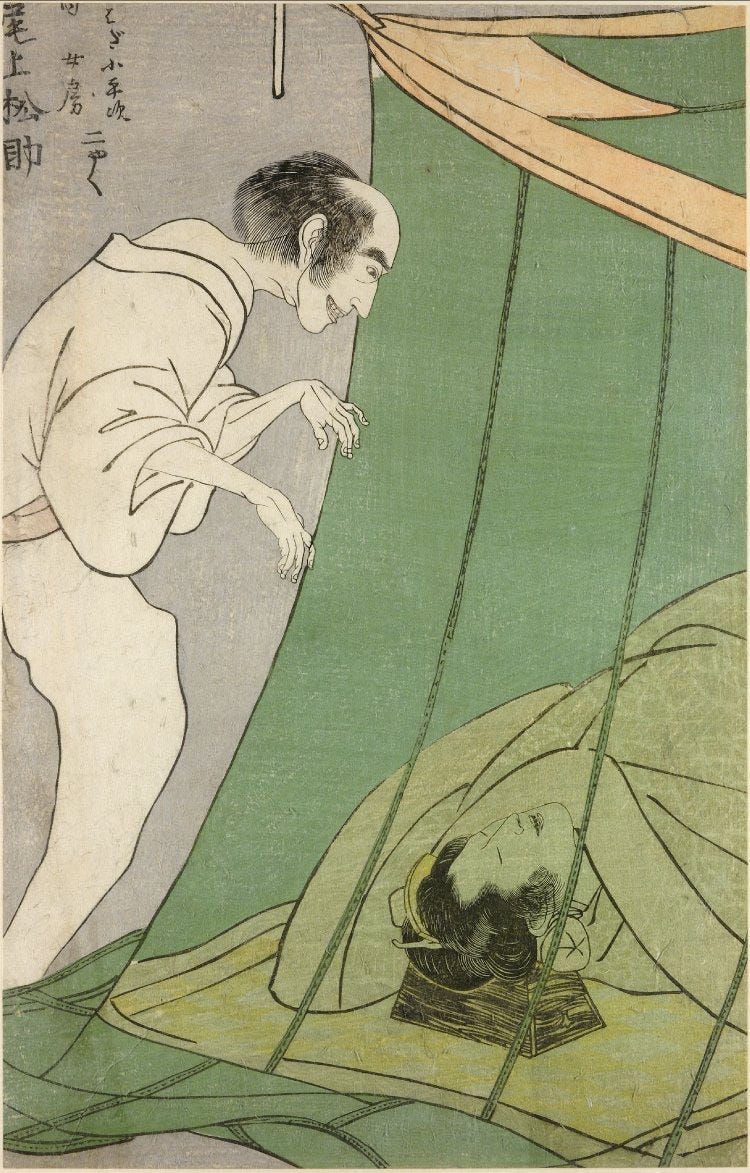
The term kanashibari is used to describe the sensation of sleep paralysis. The sensation of waking in the night unable to move, and wondering if you are truly awake or still dreaming, is indeed terrifying. In Japan this phenomenon was attributed to supernatural forces and in some cases spirit possession by yokai. Kitsune or tanuki were often believed to be behind the possession and Buddhist priests were called in to drive out the animal’s spirit. Kanashibari can also be caused by ghosts or sorcery.
Makuragaeshi
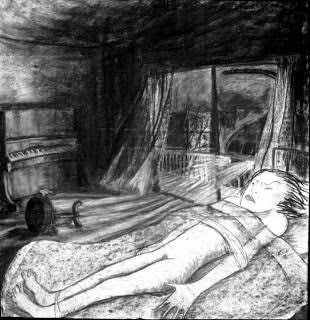
Another yokai believed to be responsible for kanashibari is makuragaeshi, which translates as pillow flipper. Makuragaeshi are ghostly, child spirits known to haunt the rooms where people sleep. They are believed to be the ghosts of children who have died, either in the haunted room, or in connection to the place they are haunting. It is said that finding little muddy footprints in your room can be a sign that a makuragaeshi is present. If you are being haunted by a makuragaeshi you may wake up with your pillow flipped over, or even find it down at your feet. There are even accounts of entire futons being moved to a different location.
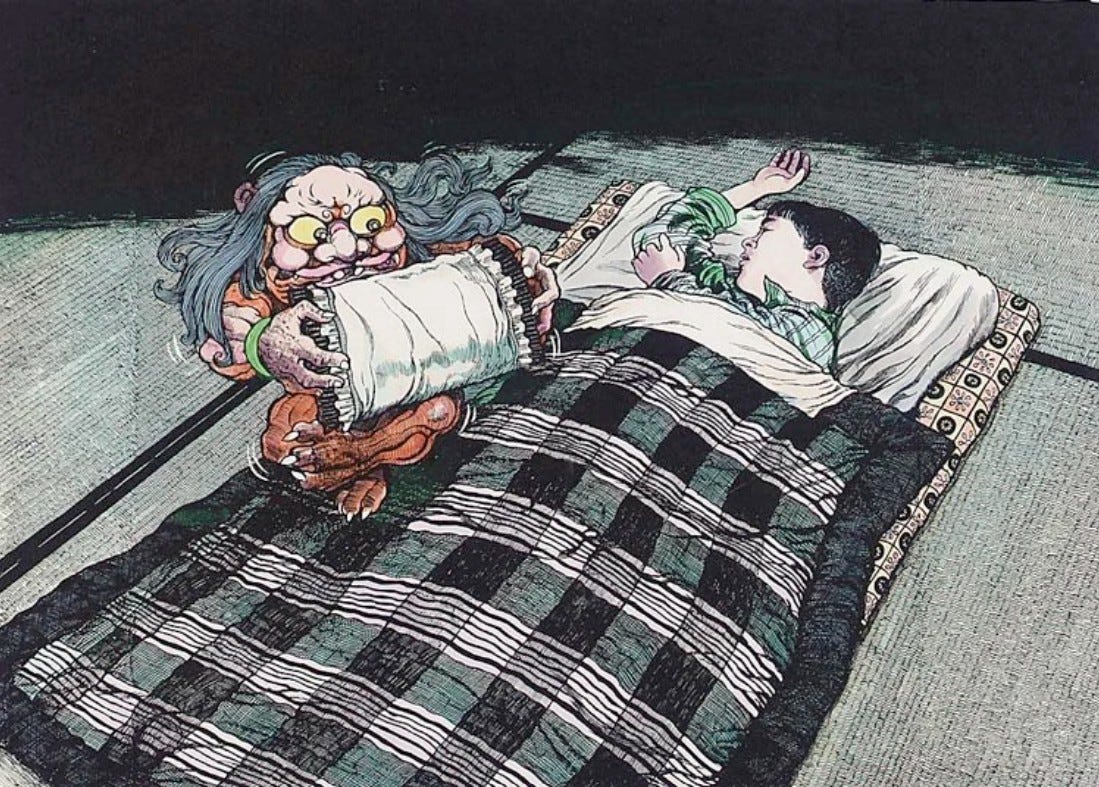
While most makuragaeshi are happy just to play pranks, some are reportedly far more sinister. There are accounts of people being flipped over or thrown around in their sleep, and even makuragaeshi that sit on the victim’s chest, and force the air from their lungs. If the victim loses consciousness, this yokai may even steal their soul, causing them to die. The origins of this folklore are believed to be connected to the belief that pillows were magical objects that allowed the sleeper to enter the world of dreams, and possibly for the soul to leave the body and journey through other worlds. Part of the fear of makuragaeshi is that by having your pillow moved, your dreaming soul may not be able to return to your living body.


Kuro Bozu
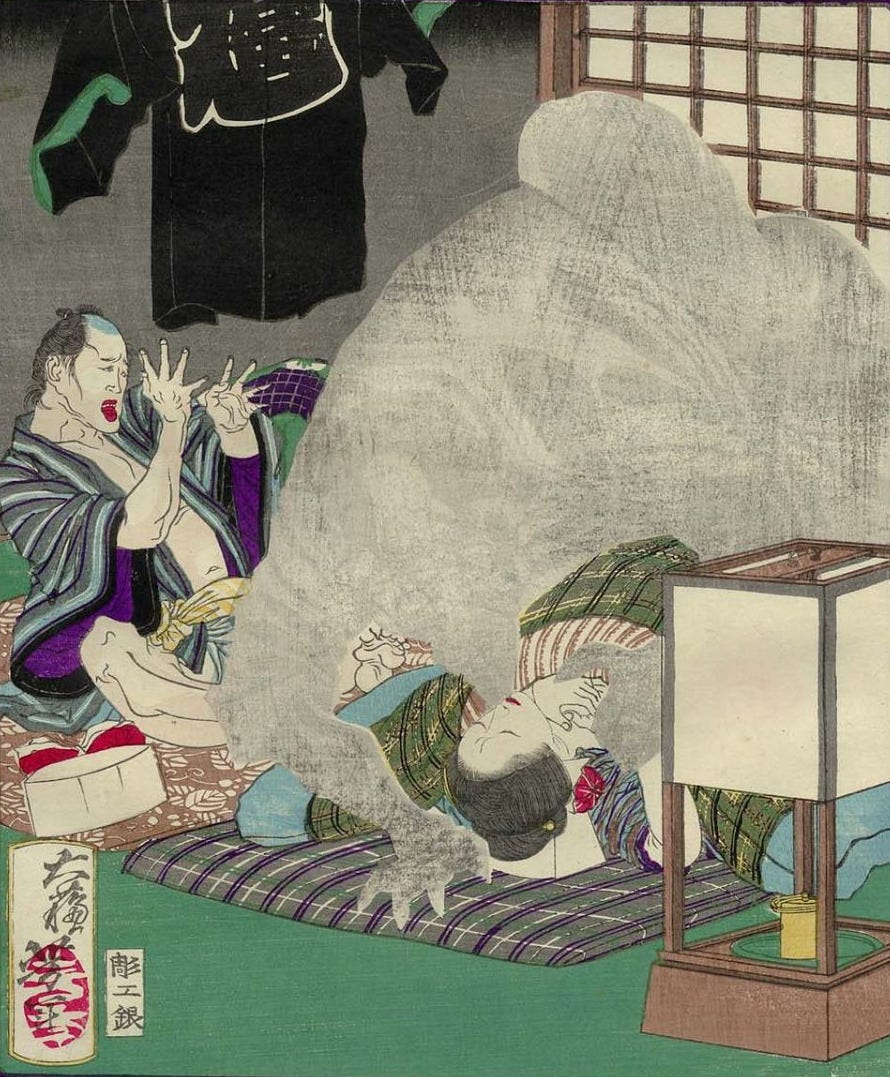
The kuro bozu is a terrifying yokai said to feed on the breath of sleeping humans. It appears as a dark shadowy figure resembling a bald Buddhist monk with bestial features, and an extremely long tongue. At night kuro bozu sneak into houses when everyone is sleeping. They mostly target women, initially licking their faces and putting their disgusting long tongues into the victim’s ears, nose and mouth before attempting to steal their breath. In some cases the women wake with their face and breath stinking of rotten fish. Frequent visits are said to make people extremely ill and apparently the only way to recover is to spend time in another location until you feel better. Thankfully it seems that once you return home, kuro bozu is unlikely to visit again.
Yamachichi
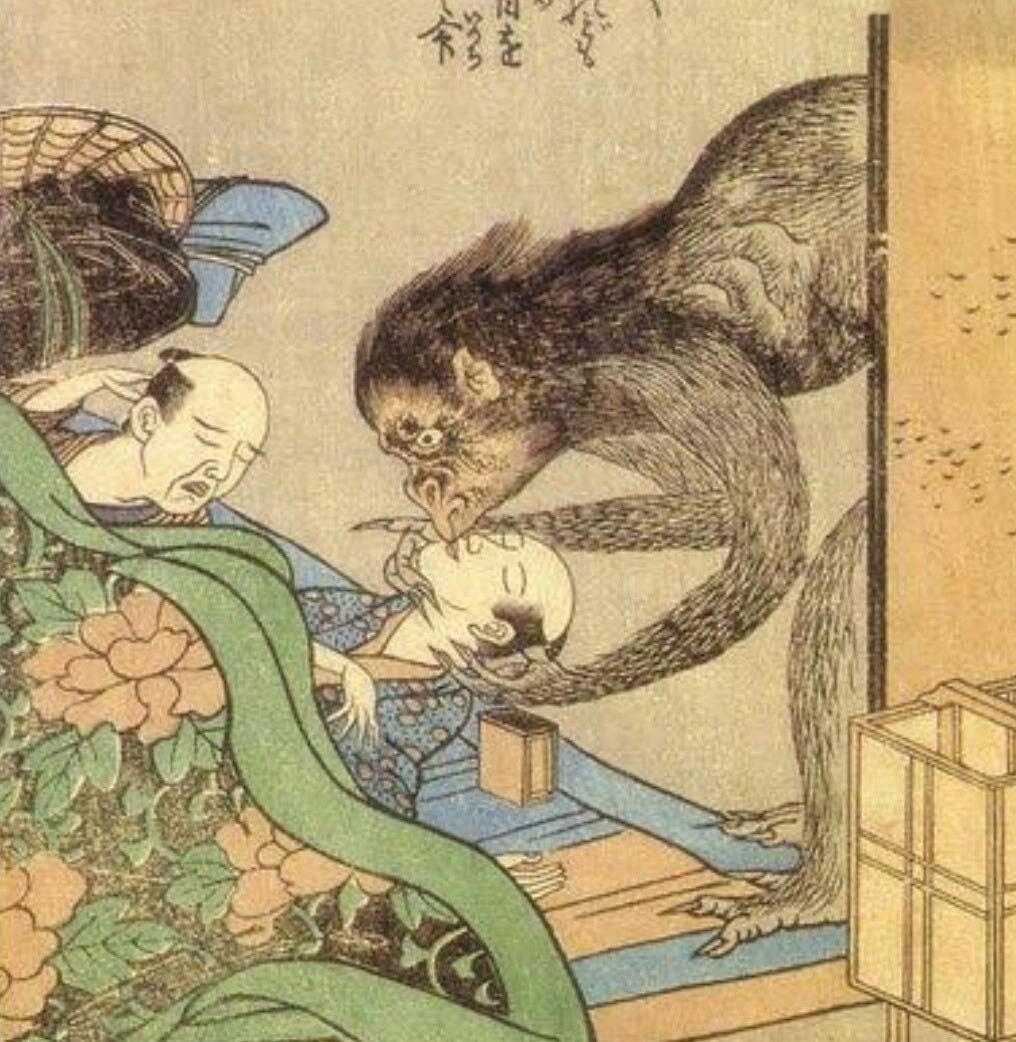
In Japan there is a belief that very long-lived bats can transform into yokai called yamachichi. Once transformed, this pointy-faced monster visits people when they are sleeping and sucks the life force from their mouth. Before leaving they are said to tap their victim on the chest, causing them to die the very next day. Despite this terrifying outcome, it is said that if the yamachichi is interrupted while sucking out the victim’s life force, it will mean the person will actually live a much longer life than expected.
Rokurokubi
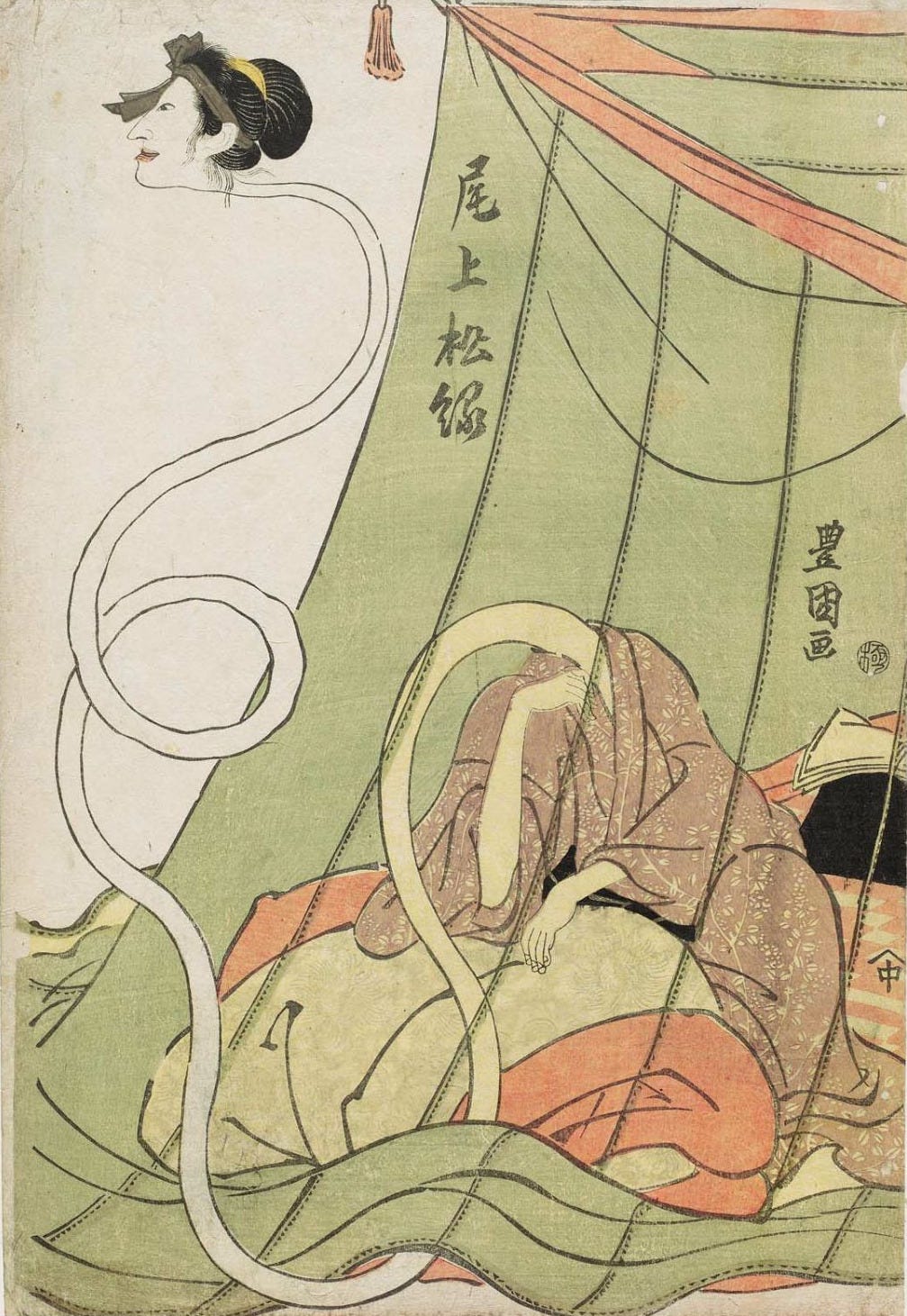
Rokurokubi are yokai that appear as regular women but with the curious ability to extend their necks while they are sleeping. There are actually two types of rokurokubi, one whose neck is able to stretch out to an extraordinary length and wander around while the body is sleeping. The other is known as nukekubi, and in this case the head can actually detach from the body and fly around freely. Apparently nukekubi are the original yokai inspired by a Chinese supernatural creature. They were sometimes depicted in art with a thin line to show that the head had travelled from the body, and over time this was interpreted as a new type of yokai with a long extendable neck. These creatures are also connected to the belief that the soul can leave the body during sleep.
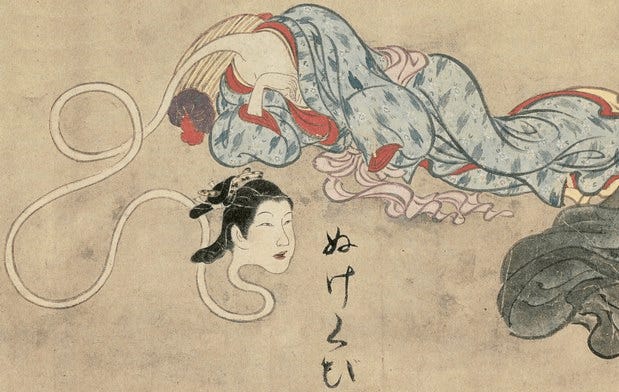
These strange extended and wandering heads have been known to get up to all manner of things during the night. From the relatively benign licking of lamp oil, to attacking and killing small animals, drinking the blood of human victims, and basically scaring people senseless. It is believed that rokurokubi were once human but transformed into yokai as a result of some form of curse. In some cases it is even said that the rokurokubi results from the sins of a male family member, but the woman bears the punishment by receiving the curse. Considering the injustice of this, it is no wonder she wants to scare people.
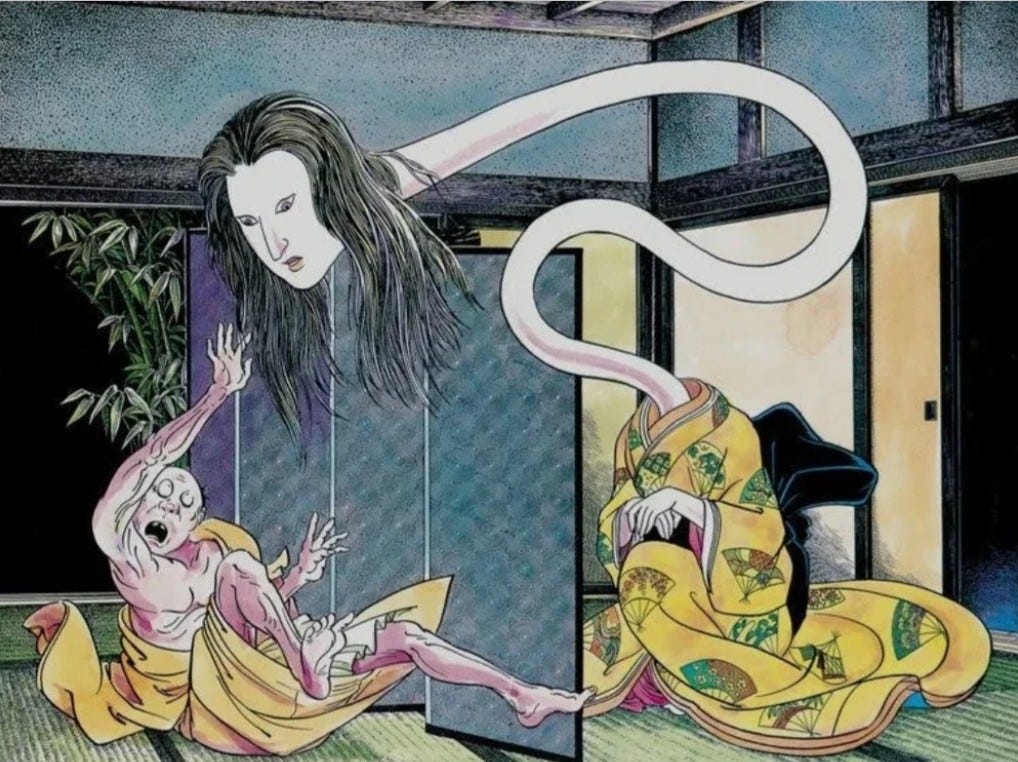
Nukekubi have a weakness though. It is said that if you move their body while the head is detached, it will be unable to re-attach. There is one tale written by Lafcadio Hearn titled Rokurokubi that is actually about a group of nukekubi. It tells of a former samurai who became a wandering Buddhist priest named Kwairyo. When travelling he came across the cottage of a family of woodcutters who invited him to stay the night. All seemed well at first, but during the night he woke to see the headless bodies of his hosts sleeping soundly beside him. He then discovered the heads flying around outside talking about how they could kill him. Quickly, he moved the bodies and when the heads returned they were unable to re-attach. The heads attacked him but with much effort he was able to fight them off before fleeing the gruesome scene.
Baku
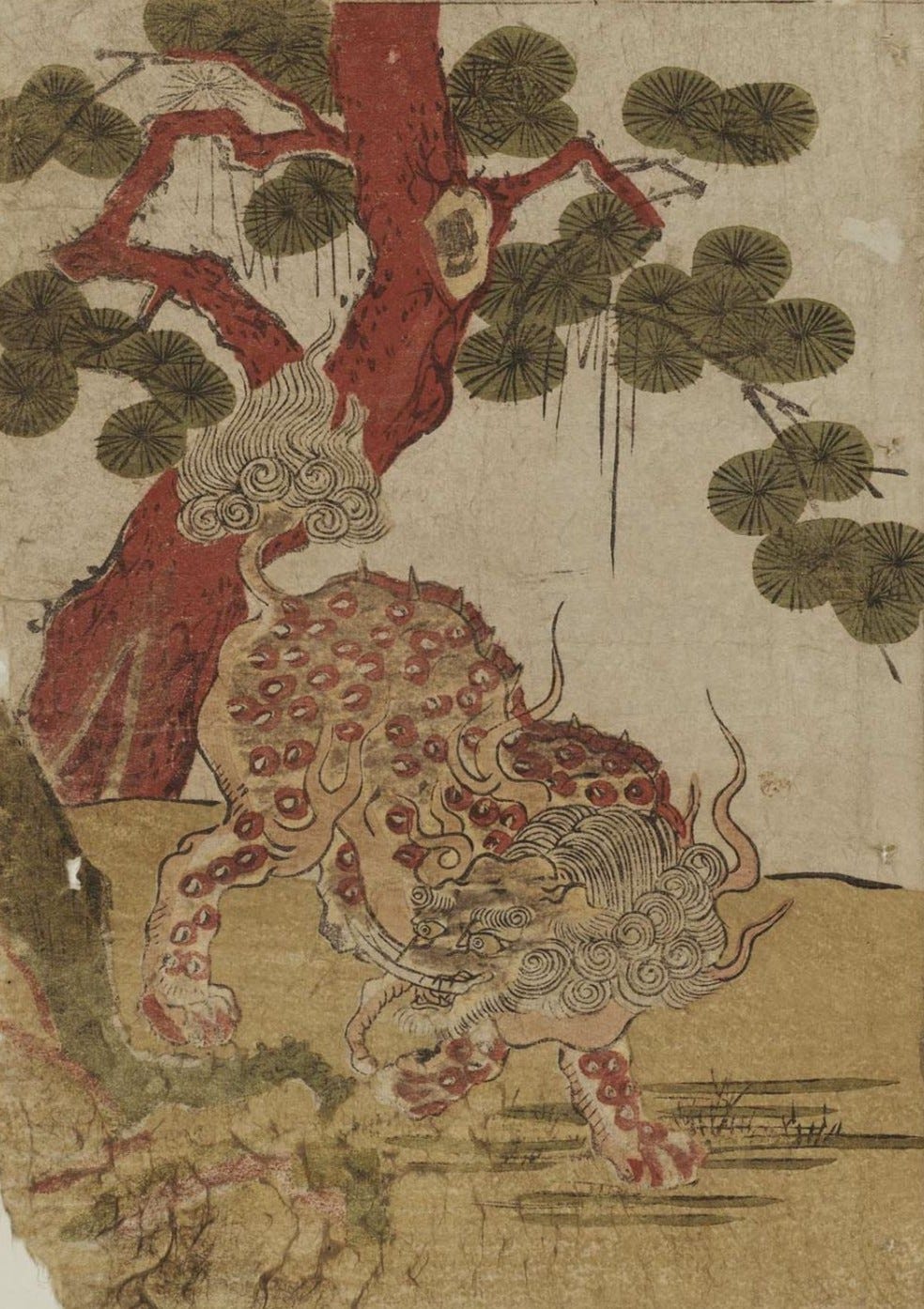
All this terrifying folklore may make you reluctant to ever sleep again, but fear not, there is one positive yokai that can help. Baku are holy chimeric beasts said to have an elephant’s head, a bear’s body, rhinoceros’ eyes, an ox’s tail, and a tiger’s legs. Baku is also the word used for the Malayan tapir, which somewhat resembles this supernatural creature.
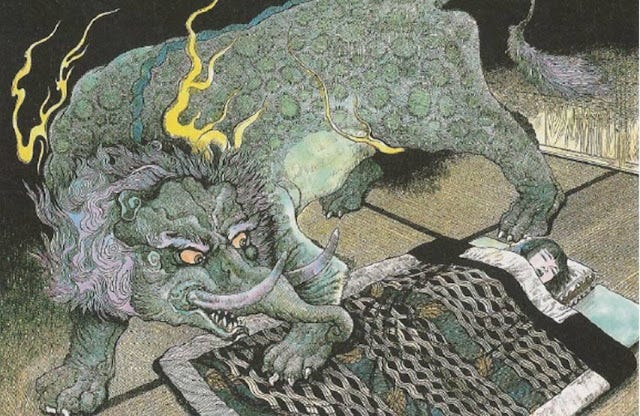
It is said that if a child (or adult) wakes from a bad dream, they can call out three times ‘Baku, eat my dreams’ and the nightmare will disappear. Baku are also said to be protective guardians that can ward off evil spirits, allowing good fortune to find you instead. In the past the name or image of a baku was embroidered onto pillows to ward off nightmares, misfortune, and to protect from sickness. There is one warning though, perhaps don’t call on the baku too often. It is said that if it is still hungry after eating your nightmare, it will eat your dreams and aspirations too.
Divine Messages
As mentioned earlier, Japanese folklore contains many stories about people being visited by gods or spirits in their dreams. Often the divine dream contains a prophetic message or some kind of supernatural assistance like in the famous tale known as Momiji. In it, a samurai dreamed of the god Hachiman who told him a princess was actually an evil demoness in disguise. Hachiman instructed him to kill her with a sword that upon waking the samurai found in his hand and used to defeat the demoness. The prints below show more examples. In the first print, the benevolent goddess Benzaiten appears in the dream of the shogun Minamoto Yorimitsu (also known as Raiko). The second print shows the Buddhist deity Fudo-myo appearing in the dream of a young priest named Yuten. Apparently in the dream he swallowed Fudo’s sword and awoke to discover he had attained great wisdom. In the third print the poet Lord Teika falls asleep at a shrine dedicated to the god of poetry and while asleep the god appears to him in the form of an old man.


Dreams and Sleep in Japanese Art
In Ukiyo-e prints dreams are often portrayed with speech-like bubbles depicting the dream images. When I first saw the print below I pondered the question of whether it is the ghosts and monsters of folklore that find their way into the nightmares of children, or if perhaps it is the nightmares of children that become the ghosts and monsters of folklore.
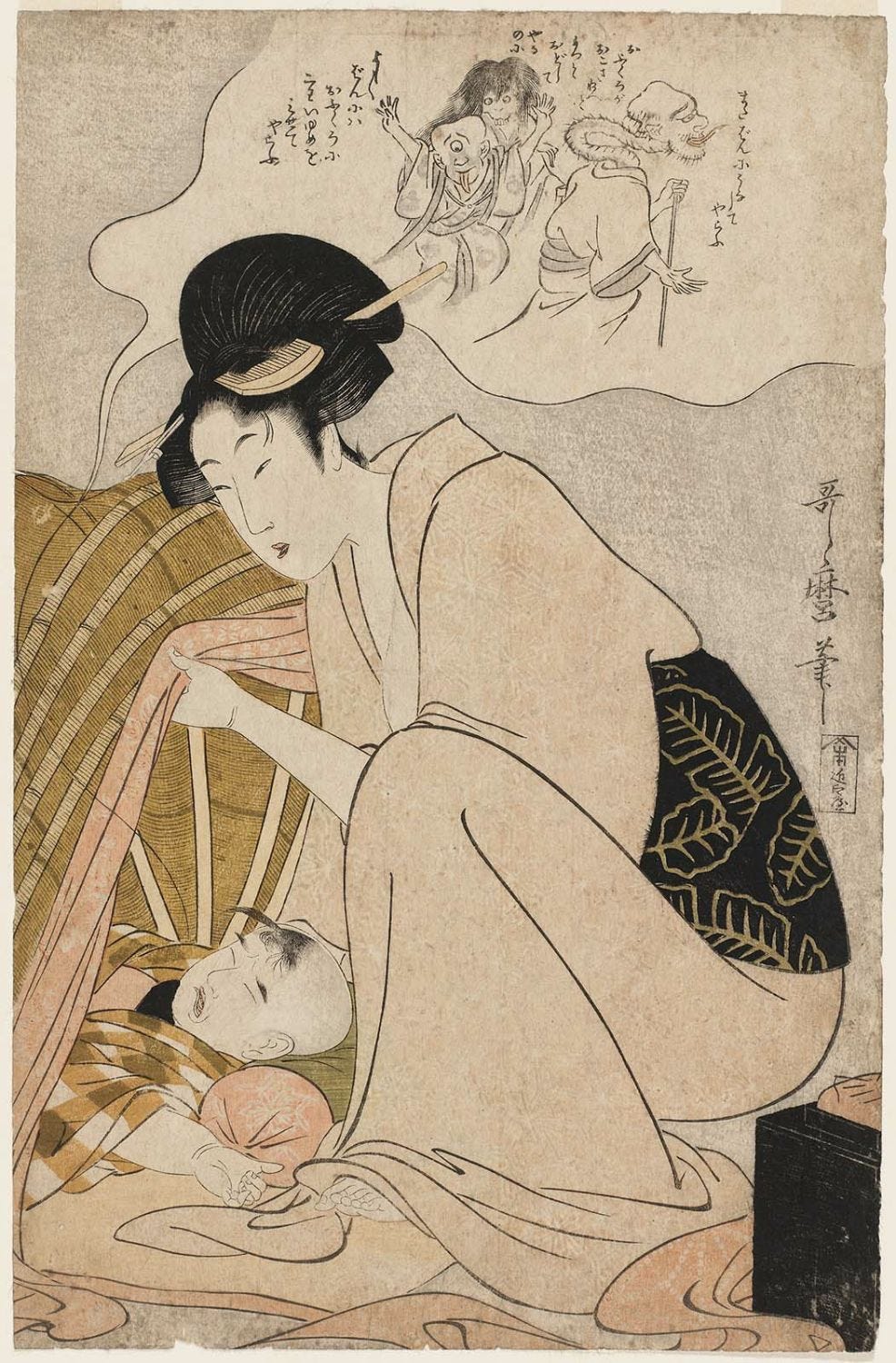
The selection of prints below depict a variety of dreams using speech-like bubbles to differentiate between the real world and the dream world.


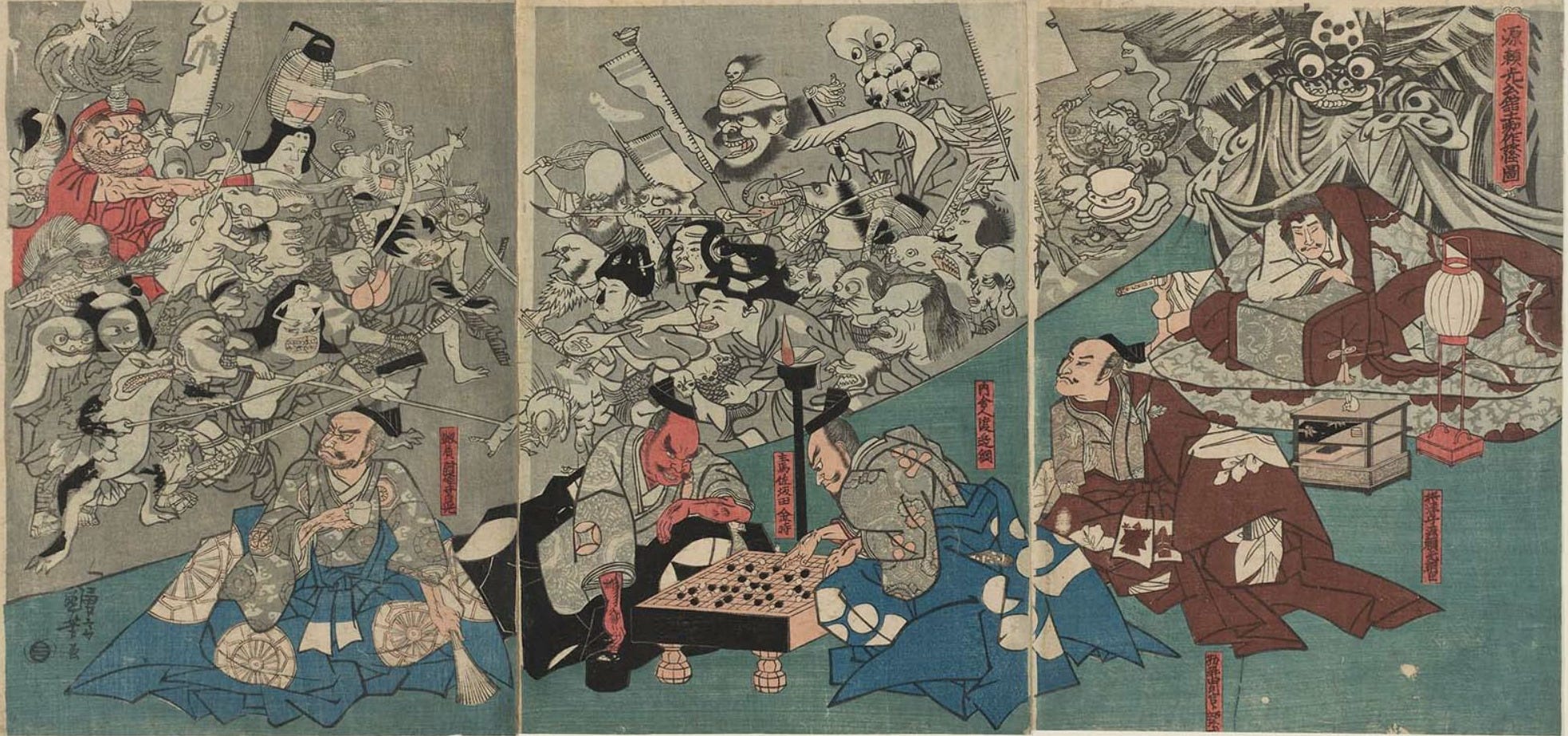
There is a famous legend of the warrior Minamoto no Yorimitsu (Raiko) and the yokai known as the earth spider. Delirious and hallucinating, Raiko had a dream in which the creature appeared to torment him and fill his dreams with terrifying monsters. The triptych print below by Utagawa Kuniyoshi attempts to depict this sequence of events.
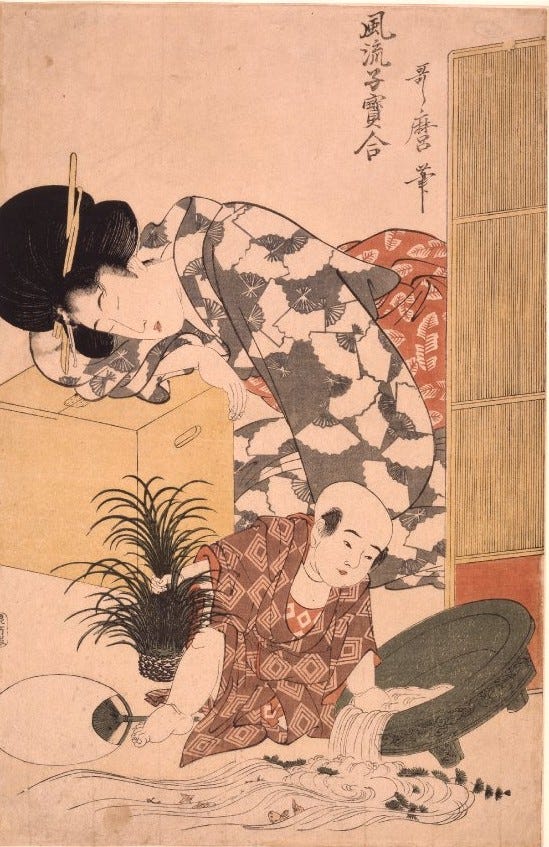
On a less terrifying note, a very popular subject of Japanese prints was beautiful women, known as Bijin (美人). In the examples below the prints depict beautiful women sleeping.


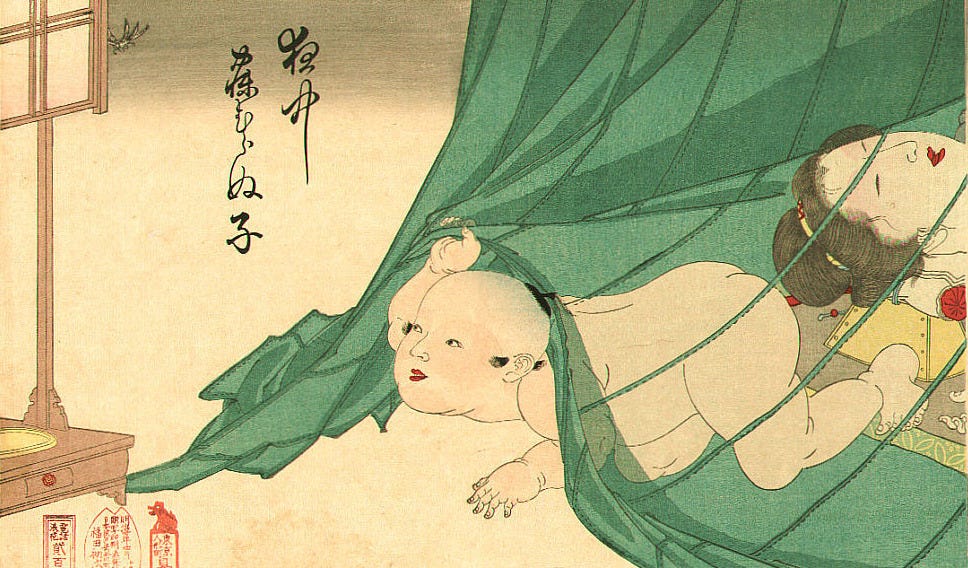
The scene depicted in the print below is relatable even today. An exhausted mother dozes off to sleep and her young child takes advantage of his newfound freedom to do all the things she would normally stop him from doing.
I hope you have enjoyed this article. If you are feeling hesitant to drift off to sleep tonight, perhaps print out one of the baku images as a protective talisman and slip it under your pillow…just in case. Alternatively you could write the character for baku 獏 instead. This newsletter is completely free but if you would like to support my work, donations will be very gratefully received via Ko-fi.


This is a wonderful article, Curious Ordinary! And of course I especially love the Baku...
I‘m writing on my dream diary as far as I can Remember and can find some truth in it